
1950
Ask any student you know, what do they struggle with the most, the answer is always the same. TIME. Between their classes, assignments, group projects, exams, and extra-curricular activities, it often feels like the day is over faster than expected. There are several who begin the week with a solid plan, but when they reach midweek, the schedule feels chaotic and stress starts building.
The truth is that time management is not about being buried in your books all the time or keeping yourself busy every minute of the day. It is about using your time in a way that important tasks get done without feeling overwhelmed.
Here, we wish to put out an easy guide containing time management tips for students, a simple weekly planner template that you can follow, and strategies that work during regular weeks as well as stressful exam periods.
Also Read - The Subtle Tension Between Mind and Gut
Student-Specific Time Challenges
Many students assume that they struggle with productivity because they lack discipline in themselves. In reality, the academic environment presents several challenges that make managing time difficult.
A major challenge is the juggling of commitments. Ways on how to manage time in school, completing homework, extracurricular activities, internships, and sometimes part-time jobs all compete for equal attention. When everything feels urgent, deciding what to do first becomes confusing.
Another challenge is the persistent presence of digital distractions. Social media, round the clock notifications, streaming platforms, and group chats can quickly take up a lot of your valuable time. What begins as a quick check of a phone often turns into an extended break without realizing it.
They also struggle when there is a lack a consistent student study schedule. Without a routine, studying becomes a quick activity rather than a planned habit.
15 Proven Time Management Tips for Students
Let us look out for some practical strategies that you can begin using immediately. These time management tips for students are simple, realistic, and proven to work when practiced diligently.
1. Start Every Week with Clear Goals
One of the easiest ways to stay organized with your tasks is to begin the week by identifying your priorities. Instead of keeping them or noting in your head, write them down.
For example, you might plan to complete two chapters of biology, draft a history essay, and review notes for an English test. When goals are clearly written, your brain automatically focuses on completing them.
Many students notice that simply writing weekly goals becomes one of the most helpful they ever adopt.
2. Try the Time Blocking Method
Time blocking in simple words is assigning specific tasks to specific periods of the day. Instead of brushing studies under the carpet and saying “I will study later,” you schedule a fixed time. You might decide to work on the math homework from 4:00 to 5:00 PM and review science notes from 5:30 to 6:30 PM.
This structured approach prevents decision fatigue. You don’t waste time wondering what to study next because the plan is already set.
3. Use a Priority Matrix
There are times when kids feel overwhelmed simply because they try to do everything at once. A priority chart helps you identify which tasks truly matter. Assignments due tomorrow obviously deserve attention before tasks due next week. By picking urgent tasks from less important ones, you avoid unnecessary stress.
This method works well alongside easy time management tips college students use to handle busy schedules.
4. Build a Consistent Study Routine
Your brain performs better when it follows routines. If you regularly study at the same time every single day, your mind naturally prepares itself for focused work. Many students discover that once they have a routine to follow, their student study schedule becomes much easier to maintain.
5. Use the 50–10 Study Strategy
Studying for long hours without breaks tends to reduce productivity. A simple solution is the 50–10 rule.
Study for fifty minutes straight with full concentration and then take a ten-minute break. During the break, stretch, walk around, or hydrate yourself instead of engaging yourself to the phone. This approach keeps your brain feeling refreshed and improves study time management skills.
6. Divide Large Tasks into Smaller Steps
Big assignments or tasks that are known to take up time often feel overwhelming. When students see a project labeled “Write a research paper,” they may feel the urge to postpone it simply because the task looks exhausting and overpowering.
Breaking it into smaller tasks such as taking time to just choose a topic, then collecting sources, creating an outline, and finally writing it in sections makes the work feel manageable.
Also Read - Why You Delay Starting Matters More Than You Realize
7. Set Personal Deadlines Before Time
Instead of aiming for the official deadline, create your own deadline a or two days earlier. This gives you extra time to review your work and fix mistakes.
It also reduces last-minute stress, which becomes especially helpful during the exam time.
8. Reduce Digital Distractions
Smartphones are the biggest obstruction in the students’ productivity. Simple habits like turning off notifications, keeping the phone deliberately in another room, or keeping it in the silent mode.
I remember during my own study sessions how often I checked messages every five minutes. The moment I started keeping my phone away from my desk, my productivity improved immediately. Managing distractions is one of the most important time management tips for students today.
9. Plan Around Your Energy Levels
Everyone has their own energy patterns. There are several who have the ability to focus best early in the morning, while others feel more productive late at night.
Try scheduling difficult subjects during your high-energy hours and lighter tasks when the energy is comparatively low. This simple adjustment can greatly improve time management for students.
10. Club Similar Tasks Together
Switching between completely different tasks or subjects can drain your mental energy. Instead, group similar activities together. For example, you might complete multiple reading assignments during one session. This technique reduces interruptions and keeps your mind in the same workflow. You can take up other tasks after a gap of an hour or so after completing the first one.
11. Use Digital Study Tools
Technology can be your partner and guide when used wisely. There are several out there who now rely on digital planners and productivity apps to stay organized.
Tools like Notion help organize notes and projects, while Google Calendar allows you to schedule classes, reminders, and deadlines. Apps such as Todoist help track daily tasks.
12. Review Your Week Regularly
Spending fifteen minutes every Sunday reviewing your week can make a big difference.
Look back at what you accomplished, areas that still needs attention, and what changes might improve your schedule next week. Gradually, this habit helps pupils develop their own system based on useful time management tips for students.
13. Learn to Protect Your Time
Students often hesitate to participate in every activity or event. While extracurricular activities are important, too many commitments can lead to burnout. You should learn to prioritise your commitments too.
When you learn to say no when your schedule is packed, it becomes a key part of keeping yourself sane. Just because you are young and energetic does not mean you need to hold all the apples in a single basket.
14. Use Visual Planning Tools
Some students tend to work better when they can actually SEE their plans. Using accessories like wall planners, whiteboards, or sticky notes can make assignments and deadlines more visible. Many students find it calming to use colors, which helps organize their study schedule and makes planning feel less overwhelming.
Also Read - The Psychology of Delayed Dreams and Finding Your Way Back
15. Reward Yourself for Progress
Motivation gets an appreciation when progress feels rewarding. After completing a challenging assignment or a homework, allow yourself a small break, treat yourself to a snack, or spend some quality time with friends and family.
Positive reinforcement makes these time management tips for students easier to maintain long-term.
Time Management During Exam Season
Proper planning before your exams is something essential. Often, students make the mistake of waiting until the last few days to begin serious revision. A better approach is to start your revisions weeks in advance. You can create a revision calendar that allows each subject to receive equal attention instead of rushed sessions right before the exams.
Active learning methods also improve exam time management. Instead of simply re-reading notes, try solving practice test papers, summarizing the chapters in bullet points, or explaining concepts aloud. These techniques are known to strengthen memory and understanding.
Always remember that sleep should also remain a priority. Lack of adequate rest reduces your concentration and memory retention. Following these structured time management tips for students during exams often feel calmer and more confident.
Balancing Your Academics and Social Life
There is a common myth about productivity that people believe. It is that students should sacrifice their personal lives to succeed academically. In reality, balance is the key. Students need time for their friends, family, hobbies and exercise. These activities tend to refresh the mind and prevent burnout.
If you ask the most productive students, they too would share that stepping away from books occasionally improves focus. A short walk, a conversation with a family member, helping with little chores, or even a hobby can help reset mental energy.
Good time management tips for students creates a proper space for both productivity and enjoyment.
Also Read - Why You Struggle to Ask for Help
The Best Time Management Tools for Students (2026)
There are several apps that help students organize their academic lives more effectively. Notion is a widely used app for managing notes, assignments, and project planning.
Google Calendar is a reliable tool for scheduling online classes and reminders.
Todoist helps track tasks and daily goals, while Forest encourages focused study sessions by reducing phone usage. Another popular tool, MyStudyLife, is designed specifically for students to manage exams, classes, and assignments.
Using the right digital tools can strengthen time management rely on throughout their academic journey.
Planner Template
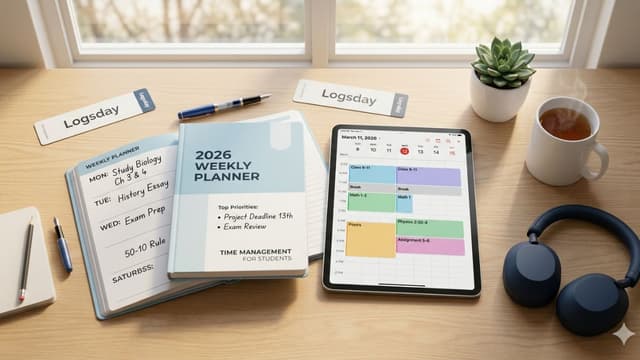
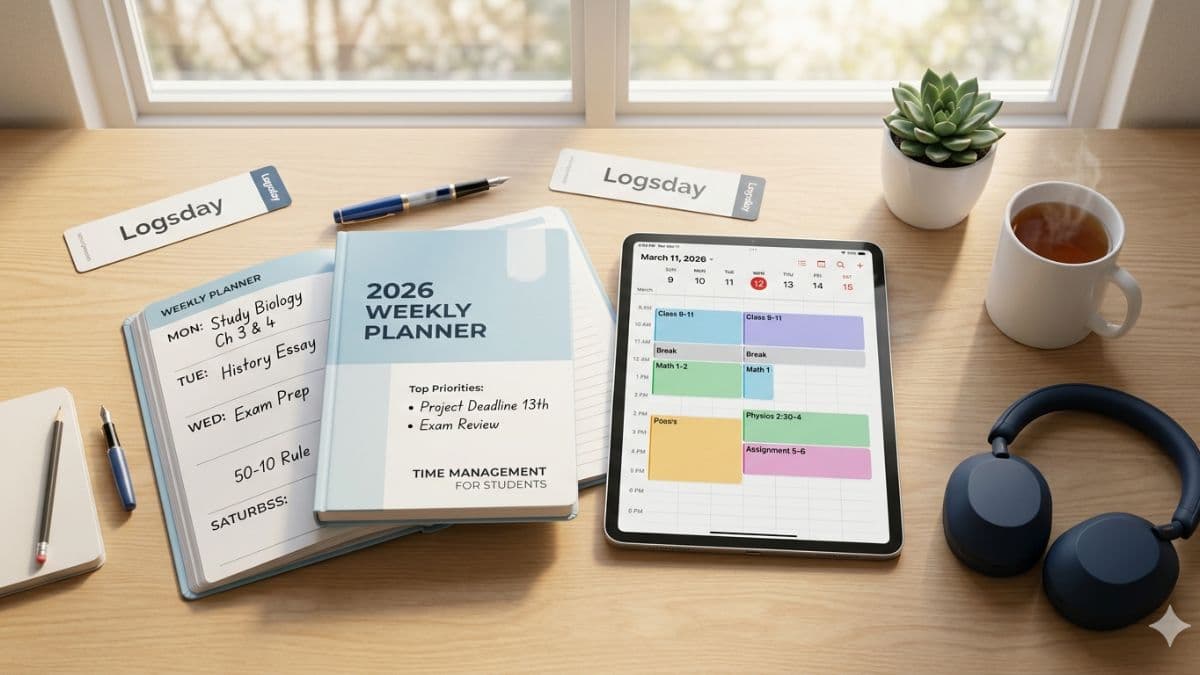
This simple planner can help students build a consistent study schedule and apply student planner tips throughout the week.
| Day | Top Priorities | Study Time | Assignments / Tasks | Notes |
| Monday | ||||
| Tuesday | ||||
| Wednesday | ||||
| Thursday | ||||
| Friday | ||||
| Saturday | ||||
| Sunday | Weekly Review & Plan Next Week |
Winding It up
Time management is not about keeping yourself busy with some activity or the other. Instead, it is about making your time purposeful.
Some days will go exactly according to plan, while others may feel completely unorganized. That’s perfectly normal. The goal is to build habits that gradually improve how you manage your schedule by making good use of these time management tips. For more such content, follow Logsday.
Also Read - How Childhood Experiences Shape Why You Crave Reassurance Today