

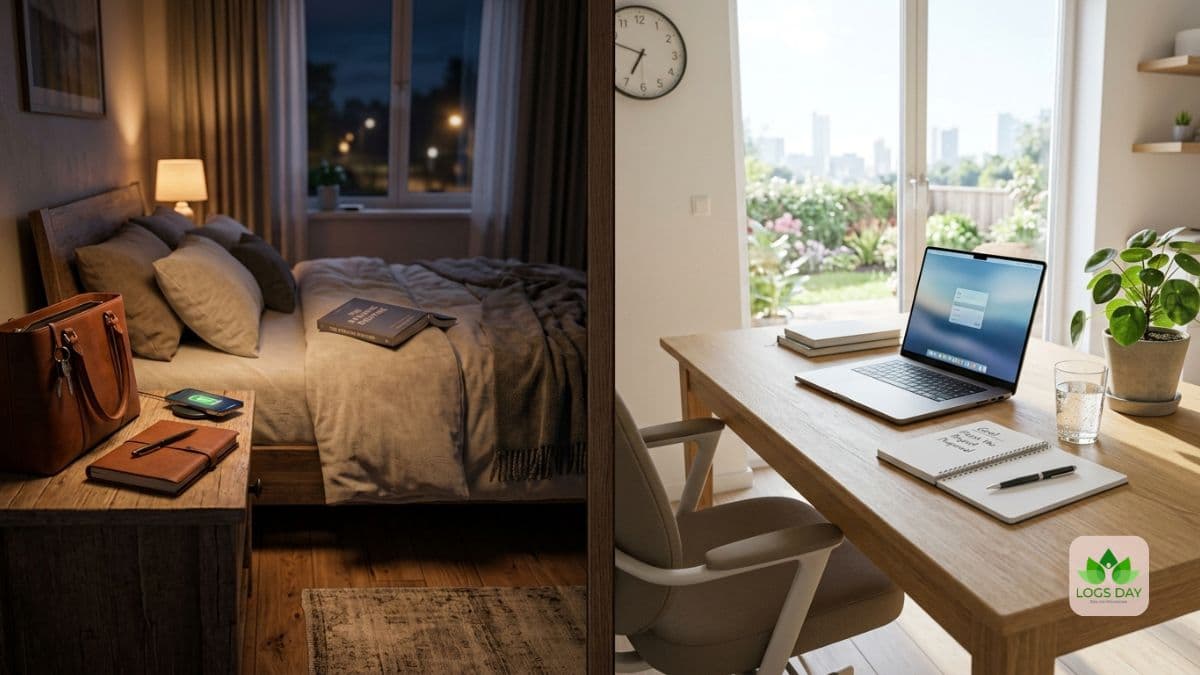
38
TL;DR
- A simple evening wind down routine helps reduce stress and makes mornings more productive.
- Pack tomorrow's essentials before going to bed to avoid last-minute rushing.
- Organize your workspace so you can start the day with a clear mind.
- Write down one main goal for tomorrow to reduce decision fatigue.
- End the day with calming activities like reading, stretching, or deep breathing.
- Keep the routine simple and follow it consistently for the best long-term results.
We all have at some point or the other seen that the worst decisions happen when the mornings begin with chaos. You wake up late, do not know where your keys are, eat anything at hand for breakfast, forget to list the grocery requirement, and start the day already feeling drained. On mornings as such, your brain spends more energy reacting instead of thinking clearly.
Well, better mornings do not actually begin when you wake up but begin the night before. A simple evening wind down routine does not just help you sleep properly. It prepares your mind, your surroundings, and your schedule so that the next morning feels easier even before it starts.
I will walk you through a simple four-step system that takes only a few minutes every day. Instead of waking up to a long list of problems, you wake up knowing exactly what comes next.
Also Read - Emotional Wellness and Sleep Quality: The 7 Minute Hack That Ended My Nightly Anxiety
Why does your evening affect tomorrow's plans?
Your evening affects the next day’s plans because your brain is made to organize information even while you are asleep.
Every task that you were unable to complete quietly occupies mental space. If your kitchen a mess, your clothes are not ironed, and the priorities for the next day are unclear, your brain has to solve all those problems the moment you wake up.
That creates stress before your day has even started. When you complete a simple evening wind down routine, you remove multiple tiny decisions from tomorrow. Instead of looking for things around you, everything is already waiting.
How does an evening wind down routine reduce stress?
An evening wind down routine reduces stress by creating a sense of control before you wrap up for the day. Most of us think stress disappears after we are asleep. In reality, unfinished thoughts tend to follow us into bed. The next day’s responsibilities roll on a loop, making it hard for the mind to relax.
When you prepare for the next day, it sends a signal to your brain saying that things are under control. You can fall asleep knowing you have already prepared for tomorrow. This also becomes a bedtime routine for better sleep.
Can a better evening really create a better morning?
Yes. A better evening always creates a better morning because it removes unnecessary load and friction.
Let me explain things in a better way. How about imagining two different mornings.
| First Morning (Unprepared) | Second Morning (Prepared) |
| Cannot find your wallet. | Wallet and essentials are already packed. |
| Lunch is not prepared. | Lunch is packed and ready to grab. |
| Workspace is cluttered. | Workspace is clean and organized. |
| Spend time deciding which task to start first. | Tomorrow's top priority is already chosen. |
| Morning feels rushed and stressful. | Morning feels calm and focused. |
| Requires more mental effort and decision-making. | Requires less mental effort, leaving more energy for important tasks. |
What makes this four-step routine different?
This routine focuses on reducing the next day’s obstacles while your mind is still calm. Each step is built on the previous one, creating a smooth transition.
Step 1: Pre-Pack Tomorrow's Essentials
This is the easiest task you can take up every night.
| Do This Tonight | Tomorrow Gets Easier |
| Pack your bag | Walk out the door without rushing. |
| Charge your devices | No low-battery surprises. |
| Keep essentials together | No searching for keys or your wallet. |
| Prepare lunch and water | Save valuable morning time. |
| Organize your workspace | Start work with a clear mind. |
Even if you work from home, prepare your workspace ready for use the next day. Put your notebook where you will need it. Charge your devices overnight. Fill your water bottle before going to bed. This omits frantic searching in the morning.
Instead of spending ten stressful minutes being clueless, you can use that time enjoying breakfast or simply waking up slowly.
Sleep experts at the American Academy of Sleep Medicine agree that reducing bedtime stress and preparing for the next day can help improve relaxation before sleep and reduce bedtime anxiety.
Step 2: Organize Your Workspace Surfaces
Your surrounding has a direct impact on how your brain feels. If your desk is covered with multiple coffee mugs, loose papers, sticky notes, charging cables and multiple other things, it can make your mind feel just as cluttered.
The moment you are done with work, spend five minutes restoring order.
- Throw away paper you no longer need.
- Put supplies and stationery back to where they belong.
- Close unnecessary browser tabs when done.
- Arrange tomorrow's documents.
When you see a clean workspace in the morning, your brain immediately knows where to begin. This simple reset can become a part of your healthy evening routine every single day. An organized environment quietly reduces stress without requiring extra effort later.
Also Read - My Simple Bedtime Routine for Anxiety: How I Finally Started Sleeping Better
Step 3: Log Tomorrow's Priority
Most people create long to-do lists for the next day. Things tend to get complicated as twenty tasks feel overwhelming even before the day begins.
What you can begin with is by writing down one important accomplishment that would make tomorrow successful. Write that down in a place that is easily accessible. That becomes your prime focus and everything else may be secondary.
This approach reduces decision fatigue as your work list is already set and you move ahead according to your priorities. Researchers at the American Psychological Association explain that decision fatigue can reduce self-control and make choosing between many options increasingly difficult throughout the day.
Step 4: Create a Gentle Transition Into Rest
After preparing tomorrow, give yourself permission to leave work behind. This is where your brain shifts from productivity to recovery with these relaxing nighttime habits.
| Instead of This... | Try This... |
| Checking work emails | Reading a few pages of a book |
| Scrolling on your phone | Listening to calming music |
| Worrying about tomorrow | Writing your thoughts in a notebook |
| Sitting for hours | Doing a gentle stretch |
| Keeping bright lights on | Dimming the lights |
| Constant notifications | Switching on Do Not Disturb mode |
Does this routine actually improve sleep quality?
Yes, there may not be a direct improvement from Day 1 but gradually, you will notice the difference. Preparing for the next day reduces mental clutter, making it easier to relax before bedtime. If you look out for effective sleep hygiene tips, this is one of the most encouraging a consistent transition from active thinking to restful thinking.
Gradually, you will notice that you fall asleep faster because your brain no longer feels responsible for the next day’s unfinished tasks. Good sleep is not only about getting enough hours to rest but also about creating an environment where your mind is not restless.
How can you make this routine stick?
| Rule | Goal |
| Keep it simple | Easy to maintain. |
| Be consistent | Repeat it nightly. |
| Follow the same sequence | Build a habit. |
| Avoid adding more tasks | Reduce stress, not increase it. |
| Do not overthink it | Just do it, like brushing your teeth. |
Eventually, your evening wind down routine becomes automatic. Once habits are a part of your daily life, they require much less motivation.
Also Read - How to Wake Up Early: 9 Tips to Become a Morning Person
What mistakes should you avoid?
One common mistake is trying to look into every possible detail. Always remember that this routine is meant to reduce stress, not create another complicated checklist.
Another mistake is checking your emails after completing your routine. You have already begun to calm things down and when emails come in, you will need to start all over.
Finally, avoid expecting instant results. Just like most healthy habits, the benefits grow with consistency and time.
Within a few days, your mornings may already feel calmer and within a few weeks, you may notice better organization and more confident decision-making.
A Calm Evening Leads to Smarter Mornings
Making better decisions does not always require undergoing professional sessions or buying expensive planning tools. Sometimes, it starts with spending just a few mindful minutes before bed.
A simple evening wind down routine removes unnecessary last-minute chaos, reduces morning stress, and gives you time and space to think well. By pre-packing your essentials, organizing your workspace, identifying your priorities, and ending the day with a calming transition, you set yourself up for a good day ahead.
The small and consistent actions performed every night often led to the biggest improvements. You not just become disciplined but also see how de-stressed you are all the time.
So how about start things tonight with just one step. Tomorrow morning, you may notice that making good decisions feels a little easier and that is exactly how lasting habits begin. For more such helpful content, follow Logsday.
Also Read - Sleep Optimization: 15 Evidence Based Habits for Deeper Sleep