
1008
TL;DR
- Many behaviors we fear repeating are learned patterns, not fixed traits.
- Self-awareness is the first step toward breaking unhealthy family cycles.
- You can appreciate your parents while choosing a different path for yourself.
- Stress often brings out familiar habits, but they can be changed with practice.
- Healthy relationships, boundaries, and reflection help reshape long-held behaviors.
- Becoming your own person is about making intentional choices, not escaping your past.
I still remember the first time I heard myself say something just how my mother used to say. My little one once asked the same question five times. And out of nowhere, the exact tone, the exact words, came out of my mouth. I completely froze. For a second, it felt like I was watching my own childhood replay all over again. That moment stirred something deep inside me, the fear of turning into someone like my mother.
Have you ever felt that? Maybe you caught yourself reacting the way your mom or dad used to. Maybe you noticed the same impatience, the same silent treatment, or even the same anger and it scared you. That is when you promised yourself you would be different. A person who is kinder, calmer and more emotionally available. So why do you have the fear of becoming like your parents?
The fear is more common than we talk about especially where many adults are trying to “break generational cycles” and raise children differently than they were raised.
Also Read - The Fear of Saying the Wrong Thing — Breaking Free from the Silence
Why This Fear Feels So Intense
Our parents are responsible in shaping our earliest experiences of love, safety, anger, discipline, and conflict. All parents try to do their best, but they were humans too at the end of the day and humans make mistakes.
If you grew up in a home with strict rules, emotional distance, yelling or criticism, financial anxiety, divorce, separation or unresolved trauma, you might carry a silent vow inside you saying “I will never be like that.”
So, when you see even a small similarity, the fear of becoming like your parents can feel overwhelming. It is not just about behavior but about identity and about who you are becoming and that can feel petrifying.
It Is Not Always About “Bad” Parents
Before coming to any conclusion this early, let me clear this. This fear does not only show up if your parents were abusive or neglectful. Even those who had loving homes feel it. It is possible that your mom was constantly overworked and neglected herself. It could also be that your dad struggled to express emotions. Another possibility could be this that they stayed in an unhappy marriage for the sake of their children.
You may have deep respect them and still not want to repeat their patterns. The fear of becoming like your parents often reflects your desire to grow beyond what you witnessed, not necessarily reject the people themselves.
Also Read - Simple Tips on How to Overcome the Fear of Being Too Much for People
The Psychology Behind It
We learn through copying. All children copy what they see like absorbing tone, reactions, beliefs about finances, relationships, and even self-worth. Psychologists call this intergenerational transmission. Patterns pass down from one generation to the other often sometimes without anyone noticing.
Take for example:
- If fights meant yelling in your house, your body may default to yelling under stress.
- If emotions were ignored, you might struggle to express your own.
- If love was shown through sacrifice, you might over give in your present relationships.
Even when you consciously reject something, your nervous system may still recognize it as “normal.” That is when the fear creeps in.
You Are Not Your Parents
This might sound obvious, but let’s pause on it. You are not your parents. You may share certain traits, habits and fears but you also have awareness they may not have had at that time. You have access to multiple things as that of therapy, books, podcasts, and open conversations about mental health that were not common decades ago.
In many ways, the fear of becoming like your parents shows growth, reflection and intention and that changes everything.
Breaking Cycles Without Breaking Yourself
There is a difference between growth and self-rejection. Some people fight so hard against becoming like their parents that they swing to the opposite extreme. Those who were raised by strict parents becomes overly permissive. Those raised by emotionally distant parents becomes overly anxious and over-involved in everything. Reacting is not the same as healing.
True change happens when you pause and ask yourself what part of this pattern needs a change, what part was actually right and what do you need right now? That is how you break cycles gently.
Also Read - The Habit of Mentally Preparing for Rejection
Parenting Brings This Fear to the Surface
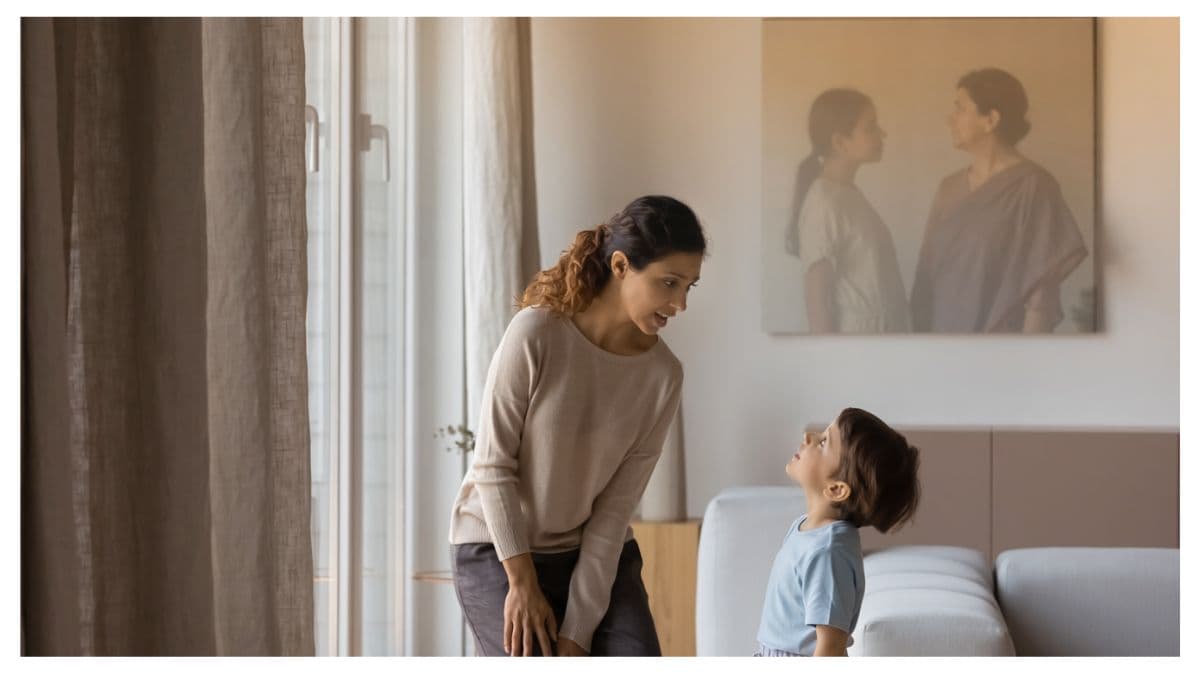
If you have children, you can resonate and know this is where it gets real. You might hear your parent’s voice in your tone, see their face in your frustration and even worry constantly about messing things up.
The fear of becoming like your parents can make you hyper-aware. Sometimes that awareness is helpful and for the rest of the times, it creates anxiety and guilt. Despite all of this, there is a truth many therapists say that no parent is perfect. What matters most is repairing and correcting the wrong. Start by apologizing if you raised your voice. Talk it through if you reacted too quickly.
Your willingness to repair things may already be a major difference from what you experienced.
What Experts Say
Dr. Lisa Firestone says that we often repeat patterns from our childhood because we are most likely to engage in these reactive behaviors in times of stress and in situations that trigger painful and primal feelings.
Diane Baumrind developmental psychologist says that intergenerational transmission of parenting styles is real meaning how parents raise their children often predicts how those children will raise their own children later.
Dr. Carol Chu-Peralta, a trauma psychologist, explains that repeating generational patterns often comes from unresolved emotional and relational wounds from our upbringing. Becoming aware of these influences rather than suppressing or denying them allows people to reshape how they parent and relate to others.
You Have More Choice Than You Think
Let us end with this question. What if the fear of becoming like your parents is not a warning that you are failing but a sign that you are awake? Some similarities may show up but awareness gives you space.
The fear of becoming like your parents does not define you but what you do with that fear does. So, the next time you hear that familiar tone in your voice, pause.
If you have been carrying the fear around, know that awareness is already your first step toward change. Start small today, choose one reaction to handle differently and remind yourself that growth happens one conscious choice at a time. For more such insightful assistance, follow Logsday.
Also Read - The Fear of Regret and The Anxiety of “What If” Thinking