
545
Struggling with fear of regret and overthinking decisions? Discover the psychology behind the anxiety of “what if” thinking and how to break the cycle.
Key Takeaways:
- The Mind Confuses Possibility with Probability
- Inaction often creates greater regret
- Uncertainty is inevitable but control is not
Can you relate to this situation where you have replayed a decision multiple times in your mind long after it was made? If yes, you would want to read ahead.
Maybe it was a job you did not apply for, a toxic relationship you stayed in for too long or a professional commitment involving moving to a different state or country. Or maybe it is something happening right now. It could be a choice sitting in front of you and your mind keeps asking, “What if I get this wrong?”
This confusion has a name. It is called the anxiety of "what if" thinking. And it quietly shapes more of our lives than we realize. In the modern times, we are told that our choices define our success, the fear of regret can feel overwhelming. We are raised to believe that the “right” decision leads to happiness, and the “wrong” one can put everything out of place.
That pressure makes even ordinary decisions feel permanent and heavy. Let me put things out for you a bit more clearly.
Also Read - Choosing Peace Over Proving: Releasing the Urge to Win Every Argument
Why We Fear Regret So Deeply
Regret hurts us because it challenges our sense of control. It starts being judgemental and makes us feel like we failed to predict our own future.
What makes regret especially painful is that it exists in hindsight. When we look back, everything seems obvious. But in the moment? We were simply doing the best we could with the information we had.
Still, the fear of feeling that future pain leads to the anxiety of "what if" thinking. We try to mentally time-travel where we simulate every possible outcome and attempt to avoid emotional discomfort before it even happens. The problem is that life doesn’t give us previews of what lies ahead.
What The Anxiety of “What If” Thinking Actually Looks Like
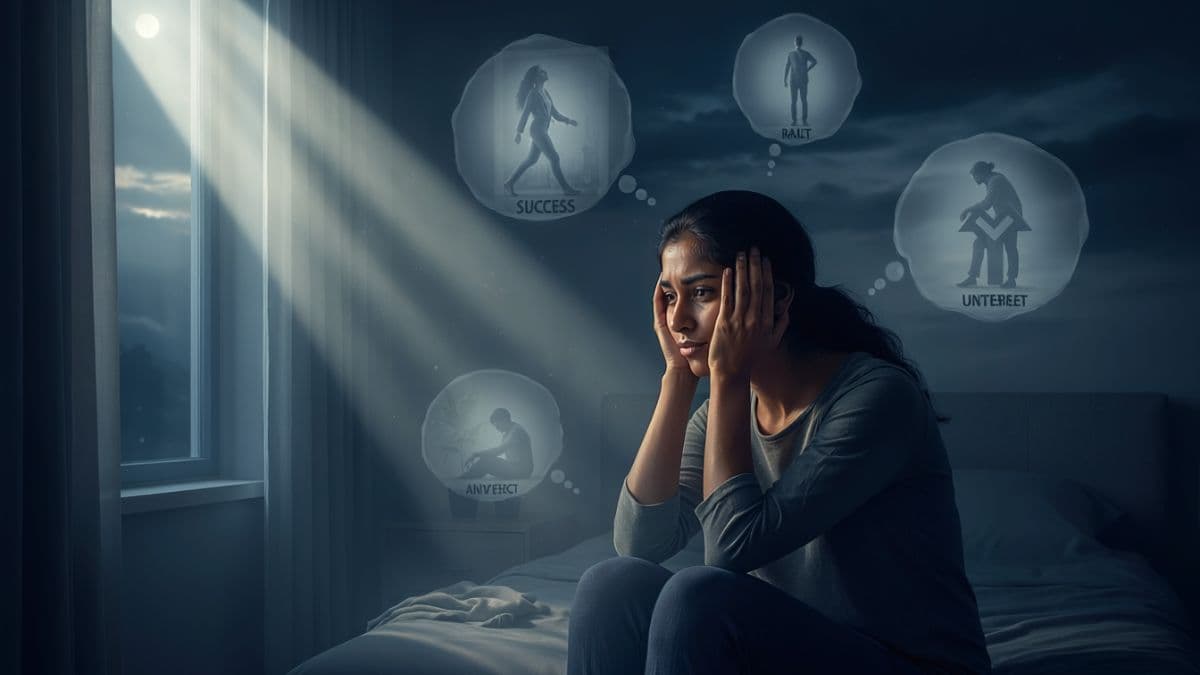
Often, there are no dramatical announcements and it shows up in small, repetitive thoughts. You might see yourself lying awake at night imagining the worst-case scenarios. Even if they aren’t meant to happen that way, you can see things being enacted. You may even be replaying a conversation over and over or probably delaying a decision because you just need some more time to think.
The anxiety of "what if" thinking often disguises itself as responsibility. It feels like you are being careful, thoughtful, and thorough with
your decisions. But instead of helping you move forward in life, it makes you hold on to the same fears on loop .
You begin to imagine failure, loss and embarrassment. The more you imagine them, the more real they feel to you. Your body reacts as if those scenarios are in motion and happening in real.
Also Read - Why You Feel Behind Even When You Are Not
Your Brain Is Trying to Protect You
There’s a biological reason for this pattern. The human brain is made to anticipate danger. Decades ago, imagining possible threats helped our ancestors survive. Today, the threats are different. Instead of the fear of predators, we fear rejection, financial instability, career failure, and social judgment. But the brain does not always distinguish between physical danger and emotional risk.
So, when you think, “What if I lose this job?” your nervous system reacts as if survival is at stake. The anxiety feels urgent because your brain believes it is protecting you. In reality, it is confusing you further to come to a conclusion.
Breaking the Cycle Gently
You do not silence anxious thoughts by fighting them aggressively. You shift your relationship with them. The next time your mind asks, “What if this goes wrong?” pause for a moment. Notice the question without answering it immediately. Simply identify that this is the anxiety of "what if" thinking showing up again.
Then try shifting the question slightly. Instead of thinking what could go wrong, think what could go right. You cannot control the outcome of each decision but you can control whether you make decisions based on fear or theory. That shift changes everything.
Also Read - The Psychology of Reinventing Yourself
What Experts Say About Regret
Neal Roese is a leading psychologist known for his research on how people think about past decisions and the “what might have been” scenarios that follow them. He has published extensively on counterfactual thinking — the mental process behind imagining alternative outcomes to decisions we made.
In a study on how one can reframe regret, Temple University research explains why regret strongly influences decisions and emotions.
Experts Crystal Reeck and Kevin LaBar observed regret’s emotional impact and why people fixate on alternate past outcomes.
Dr.Tali Sharot, Professor of Cognitive Neuroscience, University College London studies how the brain predicts the future. Her research on the optimism bias shows that humans are not neutral predictors — we distort future possibilities based on emotion. When fear dominates, predictions skew negative. Anxiety amplifies threat estimation, even when objective risk is low.
Moving Forward Anyway
Think about something you have been postponing because of the anxiety of "what if" thinking. Maybe it is sending an email, making a call or having a conversation or even applying for a job.
What is the smallest step you could take today? Not the entire leap but just the first step. Courage is rarely dramatic and is often quiet. It often looks like action taken despite uncertainty. The goal is not to eliminate fear completely but the goal is to keep moving even when fear lurks and confuses you.
You Do not Need a Perfect Future
The fear of regret and the anxiety of "what if" thinking are deeply human. They show that you care about your life and the choices. They also show that your future matters to you. Despite all of that, you cannot eliminate uncertainty and you cannot guarantee a regret-free path. What you can do is choose thoughtfully, act with integrity, and trust that you will handle whatever comes next.
Ready to break free from decision anxiety? Start practicing intentional choices today and trust that growth comes from movement, not mental rehearsal. For more such helpful content, follow Logsday.
Also Read - The Silent Pressure to Have It All Figured Out