
775
Discover organizing hacks professional designers swear by to create a clutter-free, creative workspace with smart storage, desk, and studio organization ideas.
Key Takeaways:
- Simple systems that boost focus and creativity
- Smart storage and flexible workspace solutions
- Daily habits for a clutter-free design space
When your space is right, being creative is easy. But when desks are messy, files go missing, and tools are hard to find, even the best ideas can feel stuck. Professional designers know that being organized isn't about being perfect; it's about making work go more smoothly every day. They create systems that help ideas flow naturally, save time, and lower stress. Over the years, some setups and habits have worked in both studios and home offices. These rules are not hard to understand; anyone can follow them. In this post, we'll look at some organizing hacks that professional designers swear by and show you how to use them to make your workspace calm, creative, and productive.
Why Organization Is a Creative Superpower
The majority of people think that chaos is good for creativity, but professionals know better. When your space is well-organized, your mind can think freely. You use less energy looking for things and more energy making things when everything has a place.
Designers organize their spaces to:
- Get more done without getting distracted
- Keep important tools in sight and easy to reach
- Don't let your mind get too busy
- Keep their workflow the same
These benefits explain why organizing hacks professional designers swear by are part of daily routines, not just occasional cleanups.
Your Desk Comes First
The desk is where most of the work gets done, so it needs special care. Most designers start by taking everything off and putting back only the things they really use every day. This helps you focus and relax your eyes.
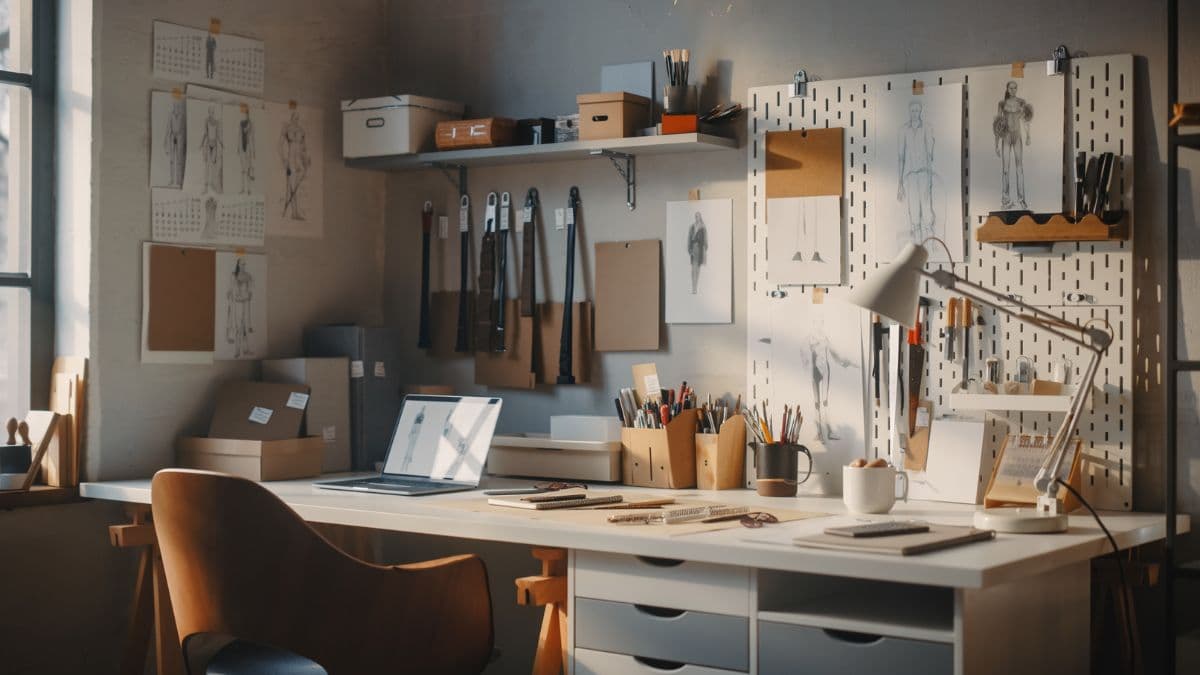
Simple designer desk organization tips include keeping things on the surface to a minimum and using drawers wisely. A clean desk doesn't mean an empty desk; it means a desk that is organized.
Helpful desk ideas:
- Keep tools you use every day close at hand
- Use trays for small things
- Leave space open for comfort and clarity
A well-planned desk will instantly improve how you work and think.
Also read: Does a Bedroom Need a Closet? Here’s The Modern Take
Storage That Looks Good and Works Hard
Professional designers pick storage that works well and looks good. They don't want to hide everything; they want smart systems that are easy to get to and look nice.
Many rely on interior designer storage ideas such as boxes with labels, open shelves, and decorative boxes. These choices help you keep things in order and give the room a unique look.
Try these storage habits:
- Put things that are alike in the same place
- Make sure everything is clearly labeled
- Keep things that aren't used often out of sight
Good storage will support both efficiency and design.
Everyday Workspace Hacks for Designers
Different creative roles need different solutions. Digital creatives, for example, often use graphic designer workspace hacks to manage tools without overcrowding their desks.
Common hacks include:
- Vertical organizers for sketchbooks
- Cable clips to keep wires in check
- Drawer dividers for tech accessories
These small adjustments will help maintain order without disrupting creativity.
Tools That Make Organization Easier
Designers often use simple but useful tools to keep things in order over time. These tools are flexible, cheap, and easy to change as your work changes.
Creative people often use rolling carts, stackable trays, and adjustable drawer dividers to help them stay organized. They help keep supplies easy to get to and move around.
Smart tools to consider:
- Clear containers so you can see what's inside
- Portable boxes for storing things on a project basis
- Adjustable organizers for when your needs change
The right tools will reduce clutter without effort.
Also read: The Only Home Maintenance Checklist You’ll Ever Need for a Safe & Cozy Home
Desk Setups That Support Technical Work
Architects use computers, big plans, and precise tools. They need space and a plan for their setups. That’s why architect desk setup ideas focus on balance and clarity.
A functional setup often includes:
- Wide desks for drawings
- Flat storage for plans
- Separate areas for digital and manual tasks
These layouts will help you focus deeply and work more efficiently.
Organizing a Creative Studio
Studios, whether shared or private, need clear systems to keep working. Designers often follow creative studio organization strategies that divide the space into clear zones.
A simple zoning approach:
- A place to work on designs
- A place to store supplies
- A place to come up with new ideas
This structure will help maintain order and supports teamwork.
Flexible Storage for Changing Needs
Design work evolves, and storage should evolve too. Many professionals choose modular storage for designers because it grows and changes with their projects.
Benefits of modular systems:
- Easy to rearrange
- Ideal for small or shared spaces
- Long-term usability
This adaptability is exactly why organizing hacks professional designers swear by in modern studios.
Also read: Common Home Layout Mistakes That Make Your Space Look Smaller
Don’t Forget Digital Organization
Things that are messy aren't just on desks. A digital mess can slow down work just as much. Organizing digital files is important for designers to stay productive.
Simple digital habits include:
- Clear folder naming
- Separate folders for each project
- Regular file backups
A clean digital system saves time and keeps you from getting stressed.
Use Walls to Save Space
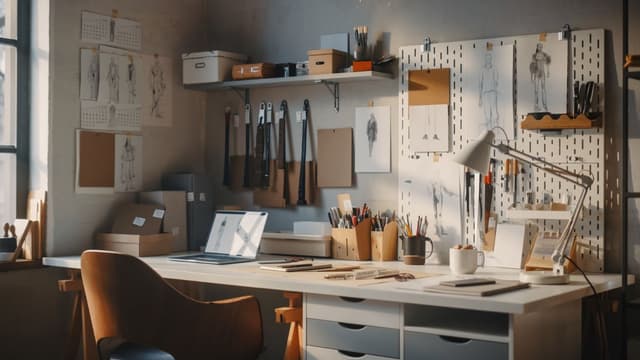
Walls are great for organizing. Many designers use pegboard hacks for design studios to free up desk space and keep tools visible.
Pegboards help by:
- Storing tools vertically
- Making supplies easy to grab
- Allowing flexible layouts
They combine function with creativity.
Keep Clutter Away with Simple Habits
Organization lasts only when habits support it. Designers who maintain a clutter-free designer workspace follow small daily routines.
Some good habits are:
- Clearing your desk every day
- Putting things back where they belong after using them
- Checking your storage once a month
Consistency keeps chaos from returning.
Expert Tips Designers Use to Keep Homes Effortlessly Organized
The best experts all agree that it's not about having more stuff; it's about having smarter systems that make it easy to keep your home clean. Shira Gill, a professional organizer and author, says to "make it categorized, visible, accessible, contained, and vertical." This means that every item should have a clear spot, be easy to see and reach, and use space well. Tia Mellis, a professional home organizer, also swears by simple tools. She adds, "I have a couple of measuring tapes in different places... one in the kitchen, one in the office, and even one in my handbag" to make sure that new things fit in your space and don't make it more cluttered.
Experts also stress habits more than hardware. Meaghan Kessman, a professional organizer in Los Angeles, supports the "one-touch" method. Put simply, when you pick up something, you should "decide its fate right away" so that it doesn't end up in a pile. Finally, many professionals do daily resets, which are small routines that happen every night to put things back in their place or clear off counters. This keeps things in order without being too much work.
A Workspace That Works for You
A clean and tidy workspace doesn't stifle creativity; it encourages it. Your mind feels lighter and more focused when you can easily find your tools, files, and supplies. The point is not to follow strict rules, but to make systems that feel natural and helpful. These methods are useful, adaptable, and easy to use in any setting. That’s why organizing hacks professional designers swear by are trusted in all areas of creativity. Begin with small tasks, develop routines, and let your workspace grow with you. Your ideas will come naturally when your surroundings are calm and purposeful.
Explore more practical inspiration for work, lifestyle, and everyday living—discover thoughtful stories only on Logsday.
Also read: How to Make a Rented Apartment Feel Like Home