
812
Let me begin with a simple question. When was the last time you woke up feeling fully rested and not just “okay,” or “things will be fine after a coffee,” but genuinely refreshed?
Did you pause to think? That is exactly why this guide that I have put together for you matters. Most people today do not struggle with sleep because they cannot sleep. They do so because their evenings are chaotic, overwhelming, overstimulating, and unpredictable. That is where a night routine for better sleep becomes a real game changer.
This is not about perfection or following a routine but about creating a rhythm that your body can trust.
Today, we will walk through everything you need right from science-backed strategies to simple habits you can start as early as tonight. As you read, you will probably notice small things that have been quietly ruining your sleep without you even realizing it.
Also Read - Why Rest Doesn’t Feel Refreshing Anymore
Why a Night Routine Beats Sleeping Pills Every Time
Let us start with a solid truth. Sleeping pills are generally considered a shortcut but not a solution. It is true that they can help you fall asleep faster but they do not teach your body to sleep naturally. Over time, the pills can interfere with your sleep cycles, especially deep sleep and REM sleep. These are the stages where real recovery happens.
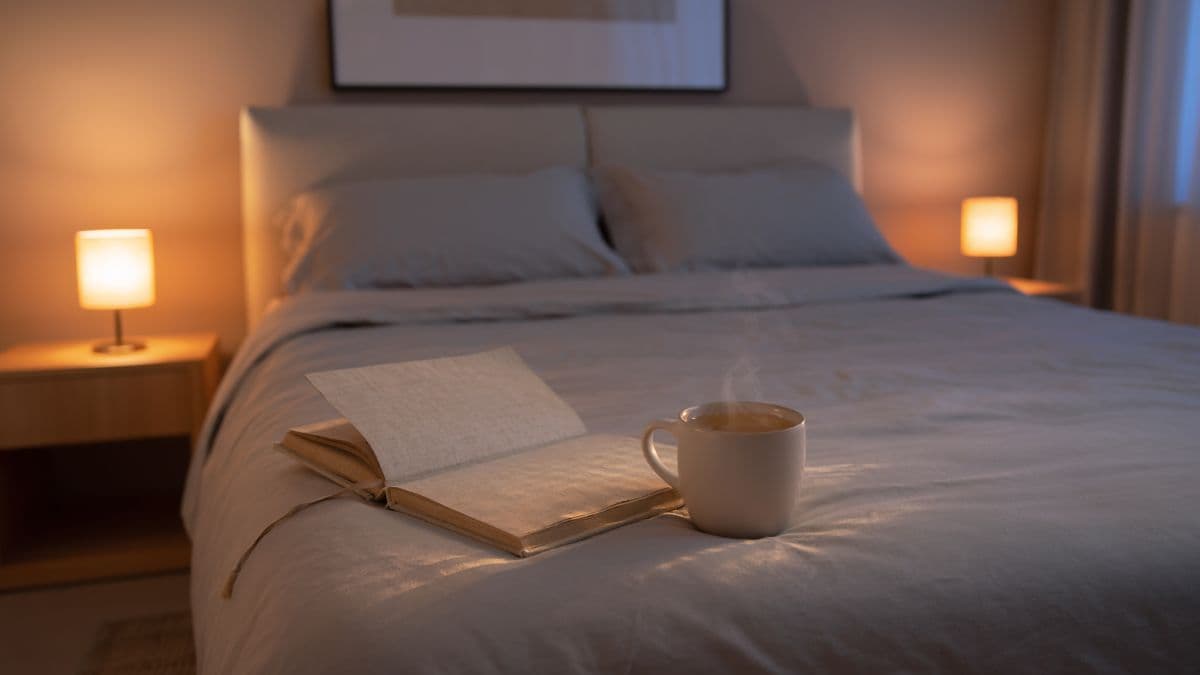
A night routine for better sleep, on the other hand, works very differently where it builds a pattern. Believe it or not, your brain loves patterns. When you repeat calming actions every night like dimming the room lights, putting your phone/laptop away, or reading a few pages off a book, your brain begins to associate those actions with sleep.
It is almost like training a muscle in your body. I remember a time when I used to fall asleep only after scrolling through my phone for at least an hour. It felt harmless but I would wake up feeling foggy every morning. The day I replaced that habit with at least 10 minutes of quiet reading, things shifted. I did not even realize when I started falling asleep faster and the mornings started to feel fresh.
That is the beauty of a good sleep routine. It does not force sleep but invites it. So instead of looking for answers to, “How can I fall asleep quickly?” try asking, “How can I prepare my body for sleep?” One shift at a time changes everything.
Understanding the 90-Minute Wind-Down Window
Here is something most people get wrong. They treat sleep like a switch on or off button. What they fail to realize is that the body does not work that way. Sleep is more like an aeroplane landing process than an instant light switch. That is where the idea of a 90-minute wind-down window comes in.
Roughly 90 minutes before your body falls asleep, it starts preparing itself. During this time, your core temperature begins to drop, melatonin starts rising, and your brain gradually moves out of alert mode. If you are still answering emails, watching intense movies or web series, or scrolling social media during this window, you are basically telling your brain, “Stay awake” and then we wonder why sleep does not come as it should.
A night routine for better sleep supports this natural rhythm. Take the 90 minutes as your “buffer zone” which is a space where you slowly transition from doing to resting.
There was a time when I used to finish work and jump straight into bed. It never ever worked. My mind would keep racing as I lay down but when I started creating a buffer, even something as simple as dimming the lights and or playing soft music made a noticeable difference.
So tonight, instead of rushing into bed, give yourself time to slow down. Trust me, your body will thank you for it.
Blue Light Blocking Strategy That Actually Works
Let us talk about something that affects almost everyone on us, screens. Phones, laptops, tablets, TVs are all part of our evenings but completely avoiding them is not realistic too. Here is the problem. These devices emit blue light telling your brain it is still daytime. It means your body delays melatonin production which is the hormone that helps you sleep.
So, what can you do?
Instead of cutting screens completely, you can manage them smartly. How about starting by lowering the brightness after sunset. Use night mode or warm light settings on your all your devices and try to stop using screens at least 30 to 60 minutes before bedtime.
If that feels like a big change to your lifestyle, you can always start smaller. Even reducing screen intensity can help. When you stop watching intense online content at night like thrillers or overwhelming videos, your mind feels calmer and sleep comes easily. A strong night routine for better sleep does not demand extreme discipline but just asks for awareness.
Also Read - You’re Tired for a Reason: Here’s What Your Body Is Trying to Tell You
Room Temperature Optimization: A Simple Fix Most People Ignore
Now let us talk about something surprisingly powerful that is your bedroom temperature. Your body needs to cool and calm down to fall asleep. If your room is too warm or cold, your body struggles to make that transition. You may fall asleep, but your sleep quality suffers.
The ideal sleep temperature is generally between 60 to 67°F (15 to 19°C). This might feel slightly cool at first, but it is perfect for a peaceful sleep. How about trying this tonight.
Lower your room temperature slightly and use breathable cotton sheets. If possible, take a warm shower before bed which helps your body cool down afterwards promoting sleep.
This is one of those small changes that can make a difference in your night routine for better sleep.
Thermal Regulation and Magnesium
Your body does not just automatically switch off when you go to bed. It gradually transitions into sleep, and there are two key processes that help make that happen smoothly.
Thermal regulation and magnesium activity.
As bedtime approaches, your body naturally starts to cool down, signaling to your brain that it is time to rest. If your room is too warm or too cold, this cooling process gets disrupted, which can make it harder to fall asleep or stay asleep for long. That is why keeping your bedroom slightly cool is such an important part of a bedtime routine for adults.
At the same time, magnesium works internally by calming your nervous system and helping regulate neurotransmitters like GABA, which promote relaxation. When the magnesium level in your body is adequate, your muscles tend to relax more easily, your heart rate steadies, and your mind feels less restless.
When you combine both these processes that support your body’s natural cooling process and ensuring your system is relaxed, you create the ideal conditions for sleep. Think of it as two hands supporting you from both sides where thermal regulation sets the environment and magnesium prepares your body from within. You do not need to overcomplicate it. Start by slightly lowering your room temperature and adding one relaxing habit before bed. These small and steady changes make your night routine for better sleep far more effective without feeling overwhelming.
According to the National Institutes of Health, magnesium helps regulate neurotransmitters that calm the brain and prepare the body for rest. This is why combining a cool environment with magnesium support can be so effective.
Magnesium Glycinate: Should You Consider It?
Did you know that Magnesium Glycinate has become popular for a reason. It is one of the most easily absorbed forms of magnesium and is known for its calming effects.
People use it to:
- Reduce stress
- Relax muscles
- Improve sleep quality
Research by experts highlights magnesium glycinate’s role in improving sleep by supporting relaxation and reducing insomnia symptoms.
Now, here’s the honest part. Magnesium glycinate is not a magic pill. When you consume it, you do not suddenly fall asleep in seconds but you feel calmer. Your body feels less tense and over time, that makes it easier to fall asleep.
So, if you are considering it, think of it as support but not a solution. Always check with a healthcare professional first and not just because I said so because you may have health conditions that differ from the rest.
Also Read - Why Do You Wake Up at 3AM Every Night? 11 Causes and How to Stop It
Sleep Journaling Method: Clearing Your Mind Before Bed
Now, let us talk about overthinking. Remember those nights when your body is tired, but your mind just will not stop? That is where sleep journaling can help. Instead of carrying your thoughts into bed, how about you putting them on paper.
Take out 5–10 minutes before bed and write things like what is on your mind, what you need to do tomorrow, or even something you are grateful for in life. It sounds simple and it works. You do not need to use fancy vocabulary or perfect handwriting. You are basically telling your brain to not hold on to thoughts anymore. This is a key part of a good hygiene routine that actually works in real life.
I started doing this a few years back during a stressful work phase, and it made a huge difference. My mind felt lighter and I stopped replaying conversations and worrying about tasks while in bed. Sometimes, clarity is what your brain needs to relax.
The Phone-Free Bedroom Challenge
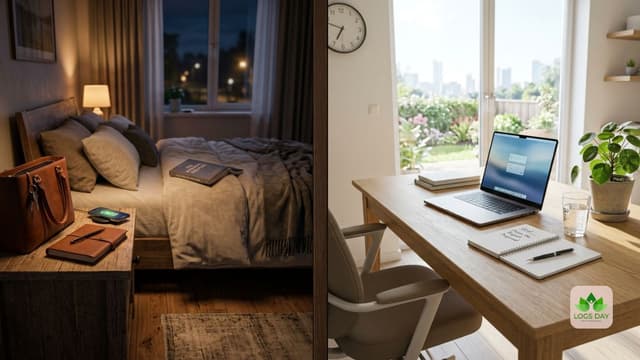
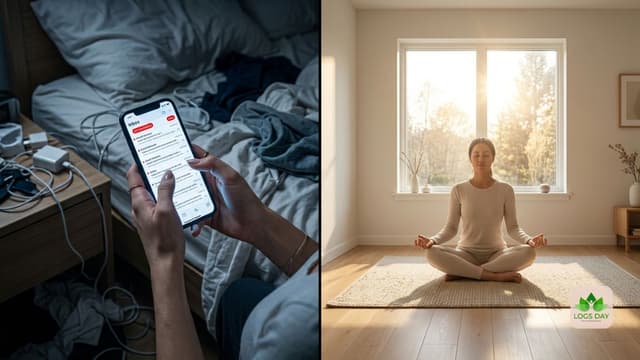
This is the hardest habit for most of us but it is also one of the most effective. Keeping your phone in your bedroom keeps your brain active. Notification sounds, scrolling, late-night checking, all adds up. So, here is a challenge for yourself. Try going phone-free in your bedroom for just three nights. I know that sounds difficult but how about giving it a try?
Charge your phone in a different room. Use a simple alarm clock to wake you up in the morning. Replace scrolling with something calming like reading a book or listening to soft music. The first night might feel uncomfortable as though something major is missing.
By the third night, you will notice something surprising where your sleep feels better and deeper. This is one of those night routine tips that feels small but creates a big shift.
Ideal Night Routine Timeline
Let us put everything together into a simple flow chart. Imagine your evening like a gradual slowdown, not a sudden stop. About 90 minutes before bed, you start dimming lights and slowly stepping away from work. This signals your brain that the day is ending.
Around an hour before bed, you shift into relaxation mode which can include a warm shower, sipping herbal tea, or light reading. At 30 minutes, you go fully screen-free. This is your quiet time that can include journaling or meditating.
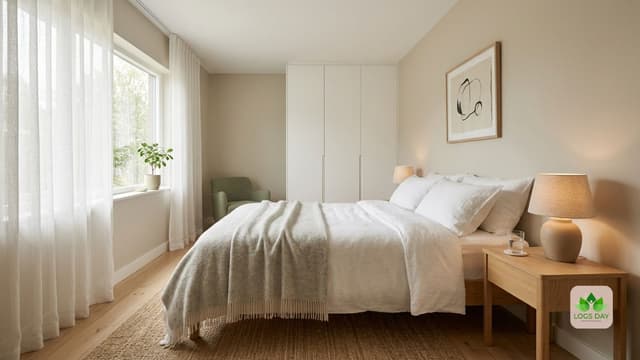
At bedtime, your room is meant to be cool, dark, and quiet. You lie down, and sleep comes naturally and not forced. This kind of structure forms the foundation of an effective evening routine for sleep. Sleep expert Dr. Matthew Walker explains that going to bed and waking up at the same time every day is one of the most powerful ways to improve sleep quality. Even if your routine is not perfect, repeating it trains your body for the days ahead.
Also Read - Your Morning Routine Secretly Controls Your Sleep: 10 AM Habits for Better Rest Tonight
Sleep Score Calculator
Let us make this practical. Use this simple calculator to assess your sleep routine.
Rate each from 1 to 5: (1 being the least and 5 being the most)
- How much screen time do you use before bed?
- Do you sleep at the same time every night?
- Is your room cool, dark, and quiet?
- How calm is your mind before bed?
- How consistent is your routine?
Add up your score.
If you are between 20–25, your routine is strong and perfect.
Between 15–19, you are doing well but can improve.
Between 10–14, your routine needs consistency.
Below 10, it is time to rebuild your approach.
Try tracking this for a week. You will start noticing patterns quickly.
Building Your Personal Night Routine
Instead of thinking about your night routine as a checklist of things you have to do, try thinking of it as something you remove from your evenings.
Most sleep problems do not come from a lack of habits but come from too much stimulation too late at night. Bright lights, constant notifications, heavy meals, inclusion of excessive alcohol, unfinished work, and mental overload all pile up. So rather than adding five new steps, start by asking yourself a different question. What is keeping me “awake” even when I’m tired?
For some people, it is their phone. For others, it is late-night work, personal fights between partners or even emotional stress that carries into bedtime. Once you identify that one thing, your “routine” becomes much simpler. It becomes more about creating a boundary. Maybe that means no work-related tasks after a certain hour, or no social media in bed. That one boundary can do more for your sleep than a long list of habits.
Another way to look at it is by designing your evening in reverse. Start from your ideal bedtime and work backward. If you want to sleep at 10:30 PM, what should 9:30 PM look like? What about the 9:00 PM picture? This approach makes your night routine for better sleep feel more intentional and smoother and not forced.
And here is something most people do not talk about. Your routine should feel a little enjoyable. If it feels like a chore and you seem disinterested, you will not be able to stick to it for long. Whether it is listening to calming music, sipping tea, or just sitting in silence for a few minutes, your routine should be something you look forward to and not something you rush through.
In the end, building a night routine is not about doing more. It is about creating space for your body to slow down, your mind to quiet, and sleep to come naturally.
In Essence
If you have been struggling with sleep, do not look for quick fixes. Build a system that also includes a sleep hygiene routine. A proper night routine for better sleep is about creating the right conditions mentally, physically, and emotionally. So tonight, how about trying one small change.
Maybe you can start with dimming the lights earlier. You put your phone away or even write down your thoughts. Start there because better sleep is not something you chase. It is something you prepare for. A good sleep is important and not a privilege. When you make good choices intentionally, things fall in place in a better way.
Start building your night routine today one small habit at a time. You do not need to overhaul your life overnight. Just pick one change from this guide and try it tonight. For more such insightful content, follow Logsday.
Also Read - How To Build Good Habits That Stick: The Science Based 66-Day Framework