1553
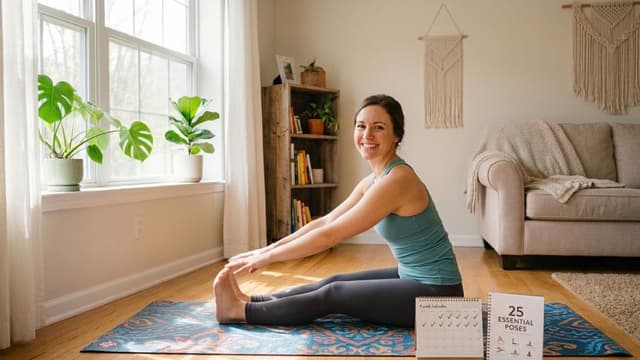
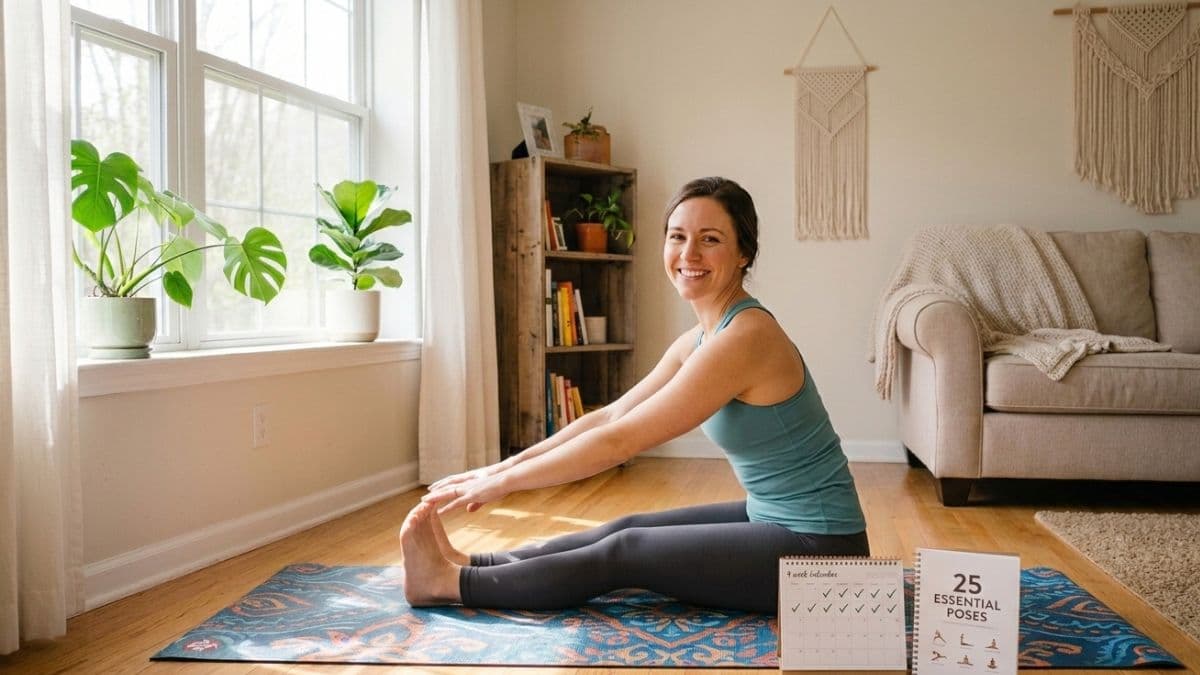
Starting yoga for beginners at home can feel both exciting and overwhelming. I still remember the day I rolled out my first yoga mat in my living room and had no idea where to begin. I still remember the day I put my first yoga mat down on the floor in my living room and didn't know what to do next. There was no teacher or studio vibe; it was just me, a video, and a lot of doubt. But that little step quickly became a daily habit that I really enjoy now.
I thought yoga needed to be flexible and perfect when I started. I couldn't even touch my toes, and it was hard for me to hold simple poses. I remember stopping videos over and over again just to get the alignment right. There were days when I wanted to give up. But I kept coming back. My body slowly started to respond. My mind felt lighter. That is when I realized this journey is personal and powerful.
Why Yoga Is Worth Starting
Yoga is more than just stretching. It connects your body and mind, helping you move better, feel calmer, and build long-term strength.
Here are some good things about it:
- Makes you more flexible and improves your posture
- Strengthens the body naturally
- Lowers stress
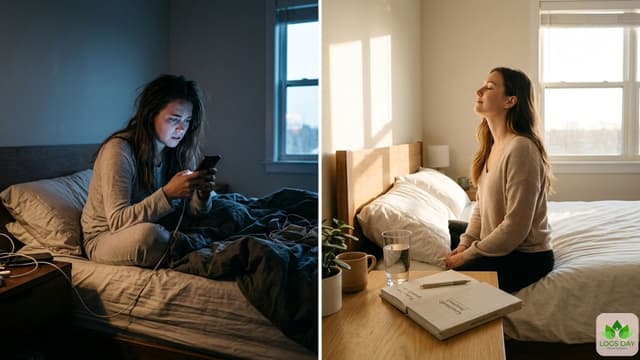
- Aids in better sleep
- Increases energy every day
Most people start yoga for beginners thinking it is easy. But it challenges your body in a gentle way. Yoga Alliance says that "starting yoga at home is an easy way to get stronger, more flexible, and calmer without needing fancy equipment." The experts there suggest that beginners focus on basic poses and breathing.
Also read: 35 Self-Care Ideas for Busy People: 5-Minute to 1-Hour Activities by Category
Choosing the Right Yoga Style
Choosing the right style helps you stay consistent with your home yoga practice.
Hatha Yoga
Slow and simple. Perfect to learn basics.
Vinyasa Yoga
Flow-based. Feels like a smooth movement sequence.
Yin Yoga
Slow and deep. You can try this yoga for flexibility.
Restorative Yoga
Relaxing and calming. Focuses on rest.
I started with Hatha because it felt manageable. Over time, I explored other styles.
25 Essential Beginner Yoga Poses
1. Mountain Pose
![[image]](https://admin.logsday.com/storage/media/Mountain_Pose_2026-03-21_03-34-33_5nZDItMc.jpg)
Put your feet together or slightly apart and stand up straight. Let your arms hang down by your sides. Put your weight evenly on both feet. Relax your shoulders and lift your chest a little. This pose may seem easy, but it teaches you how to be aware of your body and how to stand. If you’re starting yoga for beginners at home, this is a great pose to begin with. Pay attention to your breathing and stay still. It gives you a solid foundation for all standing poses and helps you feel grounded before you start.
2. Forward Fold
![[image]](https://admin.logsday.com/storage/media/Forward_Fold_2026-03-21_03-35-11_87iSlIkp.jpg)
Stand up straight and slowly bend forward at the hips. Put your hands on your legs or let them hang down. Don't make yourself touch the ground. If you need to, keep your knees slightly bent. This pose gently stretches your lower back and hamstrings. Let your shoulders and neck relax. Your flexibility gets better on its own with regular practice, without any effort.
3. Warrior I
![[image]](https://admin.logsday.com/storage/media/Warrior_I_2026-03-21_03-36-26_cmK9dGgX.jpg)
Step back one foot and bend your front knee while keeping your back leg straight. Put your arms in the air and look straight ahead. Try to keep your hips in line as much as you can. This pose makes your legs stronger and helps you stay stable. Concentrate on raising your chest and keeping your balance. It might feel strong at first, but it gets stronger and more confident over time.
4. Warrior II
![[image]](https://admin.logsday.com/storage/media/Warrior_II_2026-03-21_03-38-32_5QykP85J.jpg)
From Warrior I, move your hips apart and stretch your arms out to the sides. Keep your back leg straight and your front knee bent. Look at your front hand. This pose helps you stay focused and strong. Don't tense up your shoulders or raise your arms. It makes your legs stronger and helps you stay balanced. Try to stay in the pose while breathing slowly.
5. Triangle Pose
![[image]](https://admin.logsday.com/storage/media/Triangel_Pose_2026-03-21_03-40-50_LTg5N9gT.jpg)
Put your feet far apart. Put one arm out in front of you and lower it toward your ankle or shin. Lift your other arm up. Keep your chest open and both legs straight. This pose opens up your sides and helps you balance better. Don't lean forward. Instead, to stay stable, concentrate on opening your chest and taking deep breaths.
6. Easy Pose
![[image]](https://admin.logsday.com/storage/media/Ease_Pose_2026-03-21_03-42-42_btd6WRWt.jpg)
Cross your legs and sit comfortably. Your hands should be on your knees and your back should be straight. Take a deep breath and close your eyes. This pose is easy but very strong. It helps you relax and stay focused. You can sit on a cushion to help you. It is great for beginning or ending your yoga class.
7. Seated Forward Fold
![[image]](https://admin.logsday.com/storage/media/Seated_Forward_Fold_2026-03-21_03-43-57_0wS5NPGt.jpg)
Sit with your legs straight out in front of you. Bend forward slowly and reach for your feet. Try to keep your back straight as much as you can. Don't push yourself too hard. This pose gently stretches your legs and spine. Your flexibility gets better over time. Pay attention to your breathing and let your body relax as you stretch.
8. Butterfly Pose
![[image]](https://admin.logsday.com/storage/media/Butterfly_Pose_2026-03-21_03-44-51_ZmgpnFVD.jpg)
Sit down and put the bottoms of your feet together. Let your knees fall to the sides on their own. Sit up straight and hold your feet gently. This pose makes your hips more flexible and opens them up. You can get a deeper stretch by moving your knees up and down slowly. Don't hold your breath or breathe too quickly.
9. Staff Pose
![[image]](https://admin.logsday.com/storage/media/Staff_Pose_2026-03-21_03-46-40_okdpKuOr.jpg)
Put your feet flat on the floor and sit with your legs straight. Put your hands next to your hips. Sit up straight and tighten your core. This simple step is often recommended in yoga for beginners at home because it builds awareness from the start. This pose helps you stand up straighter and become more aware of how your body is aligned. It might seem easy, but it works very well. Your spine should be straight and your shoulders should be relaxed.
10. Half Spinal Twist
![[image]](https://admin.logsday.com/storage/media/Half_Spinal_Twist_2026-03-21_03-48-50_i8vHsEFA.jpg)
Sit down with one leg crossed over the other. Keep your spine straight and twist your body toward the bent knee. This pose makes it easier for your spine to move and helps your digestion. Don't force the twist; just move slowly. As you hold the position, pay attention to your breathing.
11. Tree Pose
![[image]](https://admin.logsday.com/storage/media/Tree_Pose_2026-03-21_03-50-03_kwjy6esZ.jpg)
Stand on one leg and place the other foot on your calf or thigh. Bring your hands together in front of your chest. Focus on a fixed point to maintain balance. This pose strengthens your legs and improves concentration. Stay calm and breathe slowly. If you lose balance, simply try again.
12. Eagle Pose
![[image]](https://admin.logsday.com/storage/media/Eagle_Pose_2026-03-21_03-51-20_YzMJ6snx.jpg)
Cross your arms in front of you and wrap one leg around the other. Bend your knees a little and be careful not to fall. This pose helps you focus and get better at coordinating your movements. Keep your core tight. At first, it might be hard, but with practice, it gets easier.
13. Dancer Pose
![[image]](https://admin.logsday.com/storage/media/Dancer_Position_2026-03-21_04-03-40_NNLEoqi9.jpg)
Stand on one leg and put your other foot behind you. Put your other arm out in front of you. This pose helps you be more flexible and balanced. Keep your chest up and move slowly. Over time, it helps you gain control and stability.
14. Cat-Cow Pose
![[image]](https://admin.logsday.com/storage/media/Cat_Cow_Position_2026-03-21_04-04-12_05xiG8II.jpg)
Get down on your hands and knees. Breathe in and raise your head and tailbone. Breathe out and round your back. Take your time with your breath. This pose warms up your back and makes you more flexible. It's a great way to start your practice.
15. Child’s Pose
![[image]](https://admin.logsday.com/storage/media/Child_Position_2026-03-21_04-05-39_MuxNcarM.jpg)
Sit back on your heels and reach your arms out in front of you. Put your forehead on the mat. This pose helps you relax your body and mind. Whenever you feel tired or need a break, come here.
16. Cobra Pose
![[image]](https://admin.logsday.com/storage/media/Cobra_Pose_2026-03-21_04-07-01_3JOvKPEs.jpg)
Put your hands under your shoulders and lie on your stomach. With your elbows slightly bent, gently lift your chest. This pose makes your back stronger and your chest more open. Don't push too hard.
17. Bridge Pose
![[image]](https://admin.logsday.com/storage/media/Bridge_Pose_2026-03-21_04-10-34_4gSQO2Wz.jpg)
Put your knees up and lie on your back. Keep your feet flat and lift your hips up. This pose makes your lower body and back stronger. Keep your breathing steady and your shoulders loose.
18. Plank Pose
![[image]](https://admin.logsday.com/storage/media/Plank_Pose_2026-03-21_04-12-11_VlS0TjVM.jpg)
Keep your body in a straight line. Put your hands under your shoulders and tighten your core. Your arms and core get stronger when you do this pose. Start with short times and work your way up.
19. Downward Dog
![[image]](https://admin.logsday.com/storage/media/Downward_Dog_2026-03-21_04-20-44_SOsf4IwO.jpg)
Make your body look like an upside-down V. Lift your hips up and keep your hands and feet on the ground. This pose makes your whole body stretch. Don't worry if your heels don't touch the floor.
20. Upward Dog
![[image]](https://admin.logsday.com/storage/media/Upward_Dog_2026-03-21_04-22-09_p8DzyuBX.jpg)
Lie on your stomach and push your upper body upward. Keep your legs extended. This pose opens your chest and strengthens your arms. Move slowly and carefully.
21. Corpse Pose
![[image]](https://admin.logsday.com/storage/media/Corpse_Pose_2026-03-21_04-23-32_cnRO2vMz.jpg)
Lie flat on your back with your arms relaxed. Close your eyes and focus on your breathing. This pose allows your body to fully relax. It is an important part of your practice.
22. Legs Up the Wall
![[image]](https://admin.logsday.com/storage/media/Legs_Up_the_Wall_2026-03-21_04-24-55_dNWYZB2v.jpg)
Lie on your back and place your legs against a wall. This pose improves circulation and relaxes your body. It is very calming and easy to do.
23. Happy Baby Pose
![[image]](https://admin.logsday.com/storage/media/Happy_Baby_Pos_2026-03-21_04-26-38_dgJldc15.jpg)
Put your feet on the ground and lie on your back. Bring your knees up to your chest. This pose opens up your hips and relaxes your lower back.
24. Reclined Twist
![[image]](https://admin.logsday.com/storage/media/Recline_pose_2026-03-21_04-28-41_QS7ctljk.jpg)
Lie on your back and twist your legs to one side. Keep your shoulders on the ground. This position helps your spine relax.
25. Knees to Chest
![[image]](https://admin.logsday.com/storage/media/Knees_to_Chest_2026-03-21_04-38-29_zs1zEHe8.jpg)
Hug your knees and lie on your back. This position helps your digestion and relaxes your lower back. Take deep, slow breaths.
I used to struggle with many of these easy yoga poses, especially balance ones. But over time, they became comfortable and enjoyable. According to specialists at Mayo Clinic, “Yoga improves balance, reduces stress, and supports overall wellness when practiced regularly”
Also read: 15 Bloating Remedies That Actually Work Fast (Doctor-Reviewed Solutions)
4-Week Yoga Plan for Beginners
This yoga plan for beginners helps you stay consistent.
Week 1
Focus on basic poses. Practice for 15 minutes daily.
Week 2
Add strength poses. Practice for 20 minutes.
Week 3
Start flow movements. Practice for 25 minutes.
Week 4
Combine all poses. Practice for 30 minutes.
This builds a complete yoga routine at home.
Budget-Friendly Equipment Guide
You only need basics:
- Yoga mat
- Comfortable clothes
- Water bottle
Optional:
- Blocks (use books)
- Strap (use belt)
That is enough for yoga for beginners at home.
Common Mistakes to Avoid
- Forcing stretches
- Holding breath
- Skipping warm-ups
- Ignoring pain
Breathing in Yoga
Breathing connects everything.
- Inhale when opening
- Exhale when folding
Focus on slow breathing.
I realized breathing changed my entire home yoga practice. It made everything smoother.
Morning vs Evening Yoga
Morning Yoga Routine
Starting your day with a morning yoga routine can boost your energy and improve focus for the entire day. It wakes up your body slowly and gets your mind ready for the day. Morning practice also helps you stay disciplined because you're less likely to skip it. Stretching, breathing, and doing simple flows for just 10 to 15 minutes can make a big difference in how you feel all day.
Evening Yoga
Yoga in the evening is a great way to relax your body after a long day. It helps your muscles relax and your mind calm down before you go to sleep. Stretches that are easy on the body and slow breathing can help you sleep better and feel less stressed. Evening sessions can help you reset if your day has been busy. It's a great way to relax and make a calm bedtime routine.
Yoga for Specific Goals
Yoga for Flexibility
If you want to be flexible, do slow and deep stretches. The best poses are forward fold, butterfly pose, and yin yoga sequences. Take deep breaths and hold each pose for a longer time. Don't hurry. Your muscles get looser and your range of motion gets better over time if you practice regularly. When it comes to flexibility training, consistency is more important than intensity.
Yoga for Strength
Add poses like plank, warrior, and bridge to your routine to build strength. These poses work your core, legs, and arms. Every time, hold them for a few more seconds. Your body gets stronger over time without needing to lift heavy weights. Yoga strength training is gentle, but it works when you do it often.
Yoga for Stress Relief
To relieve stress, do calming poses like child's pose, legs up the wall, and deep breathing exercises. These poses calm your nervous system and lower your stress levels. Moving slowly and breathing mindfully can help your mind feel lighter. Regular practice can help you deal with stress better and make you feel better overall.
I personally started yoga to reduce stress. Over time, I noticed my strength improving too. That was something I did not expect.
Your Yoga Journey Starts Here
Starting yoga for beginners at home is simple. You don't have to be perfect. You only need to get going. Even on slow days, keep coming. Over time, you'll notice a difference in both your body and mind.
Explore more lifestyle tips and wellness guides on Logsday to build a healthier routine and stay consistent with your fitness journey.
Also read: 50 Sustainable Living Tips You Can Start Today (Organized by Impact Level)