
1462
TL;DR
- Acne can be managed at home using dermatologist-approved remedies backed by scientific evidence.
- Ingredients like tea tree oil, aloe vera, honey, green tea, and ice may help reduce pimples, redness, and inflammation.
- Consistency, gentle skincare, and avoiding pore-clogging products are key to seeing results.
- Popular DIY hacks like toothpaste, lemon juice, and baking soda can irritate the skin and should be avoided.
- Home remedies work best for mild acne. Persistent, painful, or cystic breakouts should be evaluated by a dermatologist.
If you're searching for home remedies for acne, you're probably hoping for something that actually works—not another viral DIY hack that leaves your skin worse than before. While the internet is full of quick fixes, only a handful of natural remedies have scientific evidence and dermatologist support behind them. From calming inflammation to reducing acne-causing bacteria, certain ingredients can genuinely improve mild breakouts when used correctly. In this guide, you'll discover 14 dermatologist-approved home remedies for acne, learn which ones are worth trying, and find out which popular remedies are best avoided to protect your skin.
Acne Types Explained
Not all acne is the same, and understanding the difference helps you choose the right remedy. Whiteheads are oil-filled and dead-skin blocked closed pores.
Blackheads are identical except that they are open to the air, thus becoming dark. Papules are inflamed scabs, which are small red bumps. Pustules are papules that have pus visible on the tip. The nodules and cysts are more painful and deeper and are placed beneath the skin. The majority of home remedies for acne are effective with whiteheads, blackheads, papules, and pustules. The nodules and cysts can hardly be treated by themselves.
Also read: Micro Workouts: How 5-Minute Movement Snacks Can Replace Your Gym Session
14 Home Remedies for Acne That Dermatologists Approve
1. Tea Tree Oil
![[image]](https://admin.logsday.com/storage/media/Tea_Tree_Oil._2026-03-12_16-00-53_uvorHJhl.jpg)
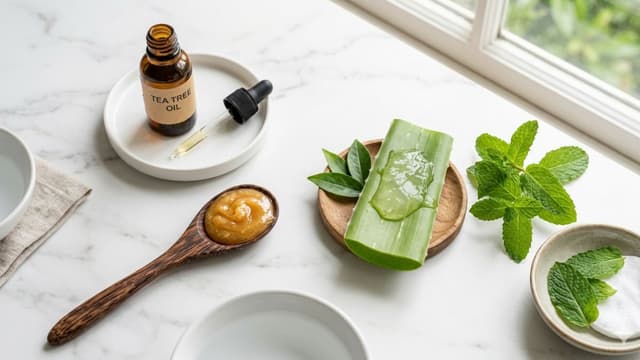
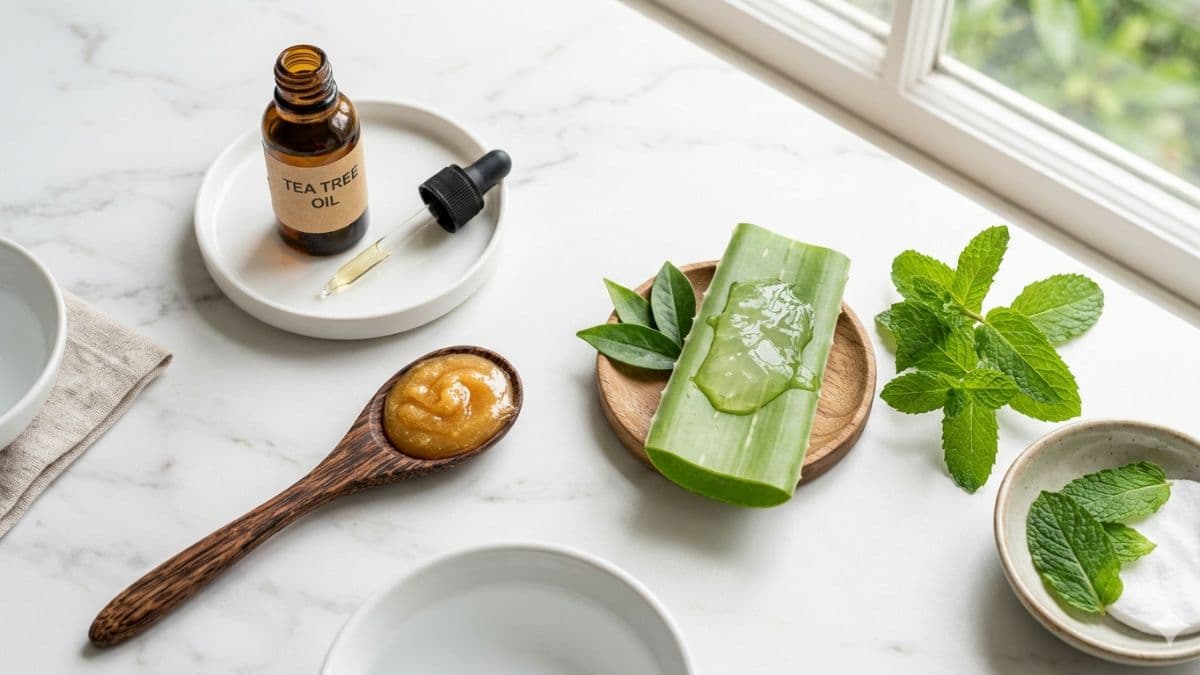
Tea tree oil for acne is one of the most well-researched natural options available. It also includes terpinen-4-ol that is powerful antibacterial and anti-inflammatory. Research indicates that it lessens the amount and the intensity of acne lesions. Always dilute it, one part tea tree oil and nine parts water or carrier oil. Apply using cotton bud on spots. Do not use pure as it will severely irritate skin.
2. Honey
![[image]](https://admin.logsday.com/storage/media/Honey_._2026-03-12_15-57-25_KFeu4ft4.jpg)
Raw honey, particularly Manuka honey, contains naturally available antibacterial qualities. A honey face mask acne treatment kills acne-causing bacteria while keeping skin hydrated. Use a thin layer to clean the skin. Leave for fifteen to twenty minutes. Rinse with warm water. The best results are two to three times a week.
3. Aloe Vera
![[image]](https://admin.logsday.com/storage/media/Aloe_Vera_2026-03-12_15-54-42_hV1RuzEb.jpg)
Aloe vera gel is one of the safest natural acne treatments available without a prescription. It lessens redness and inflammation in a very short period and cures post acne marks with time. Take the pure aloe vera gel, the part of the plant or a high percentage aloe product of ninety percent. Place it overnight after cleansing.
4. Green Tea Extract
.
![[image]](https://admin.logsday.com/storage/media/Green_Extract_2026-03-12_15-53-10_9GRoaFhT.jpg)
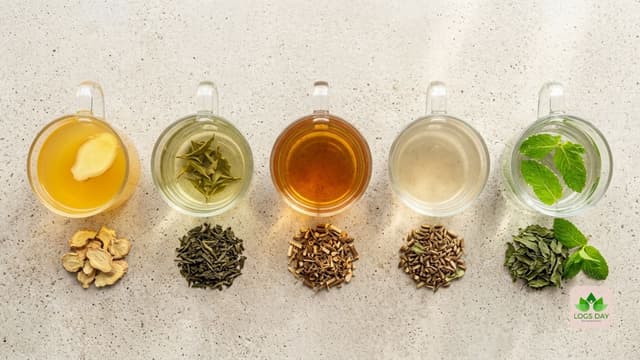
Green tea contains many antioxidants which inhibit sebum and combat bacteria in the skin. Make a cup of tea and cool and put on your face with a pad of cotton. Take a ten-minute break and take a shower. This is a simple and effective acne home treatment you can do daily.
5. Zinc Supplements
![[image]](https://admin.logsday.com/storage/media/Zinc_Supplements._2026-03-12_15-51-13_NbSg5ZHF.jpg)
One of the most researched nutrients to treat acne is Zinc. When the level of zinc is low, it is always associated with more serious breakouts. It causes a decrease in inflammation and restrains the bacteria that cause acne. The most efficient forms are zinc gluconate or Zinc acetate taken orally. It is better to consult a physician and start with the correct message.
6. Apple Cider Vinegar (Diluted)
![[image]](https://admin.logsday.com/storage/media/Apple_Cider_Vinegar_2026-03-12_15-14-18_ynuK1Ii6.jpg)
Apple cider vinegar is a source of organic acids that kill bacteria and remove excess oil. One part mixed with three to four parts of water. Apply using a cotton pad, wait between twenty and thirty seconds, and then wash. Use only a few times per week. Apple cider vinegar is too harsh on the skin when it is in its pure form, so it must be diluted.
7. Witch Hazel
![[image]](https://admin.logsday.com/storage/media/Witch_Hazal_2026-03-12_15-23-08_f9jd8VMZ.jpg)
Witch hazel gets rid of surplus oil, clears pores and gets rid of redness. It is a good toner following cleansing. Wipe using a cotton pad on the affected areas. It is gentle enough for daily use and fits well into any DIY acne remedies routine for oily skin.
8. Ice
![[image]](https://admin.logsday.com/storage/media/ICE_2026-03-12_15-26-37_MfskO808.jpg)
An iced spot in a fresh cloth used to apply to an inflamed area for one or two minutes will ease the redness and swelling. It not only does not treat the cause but also relieves angry spots in sight before an event. It is one of the simplest home remedies for acne flare-ups.
9. Salicylic Acid (OTC)
![[image]](https://admin.logsday.com/storage/media/Salicylic_Acid_2026-03-12_15-29-46_8oGVzvYY.jpg)
Salicylic acid is available over the counter for cleaning and spot treatments. It infiltrates pores, dissolves old skin cells, and prevents congestion. Begin with 0.5 to 1 percent to prevent drying. This is one of the most dermatologist-recommended acne home treatments you can use without a prescription.
10. Niacinamide
![[image]](https://admin.logsday.com/storage/media/Niacinamide_2026-03-12_15-33-16_fOo3zo7M.jpg)
Niacinamide is a derivative of vitamin B3, which exists in most over-the-counter serums. It curbs inflammation, regulates oil and eliminates post-acnes spots. It suits every type of skin and is not harsh to use on a daily basis. Apply after cleansing and before moisturizing as part of your natural acne treatment routine.
11. Bentonite Clay
![[image]](https://admin.logsday.com/storage/media/Bentonite_Clay_2026-03-12_15-35-30_urhtg1fl.jpg)
The Bentonite clay pulls out impurities and excessive oil in pores. Take water to make a paste, put it on the affected areas and then give it a rinse after ten or fifteen minutes. Use once or twice a week. Its effectiveness is on the oily skin, prone to blackheads and whiteheads.
12. Spearmint Tea
![[image]](https://admin.logsday.com/storage/media/Spearmint_Tea_2026-03-12_15-41-16_RtS9gyjq.jpg)
Spearmint tea is effective against hormonal acne, especially on the jawline and chin. Spearmint possesses natural anti-androgenic effect that reduces oil inducing hormonal levels. Drink 2 cups per day regularly, at least four to six weeks to notice improvement.
13. Probiotics
![[image]](https://admin.logsday.com/storage/media/Probiotics_2026-03-12_15-44-33_vWEZKRuW.jpg)
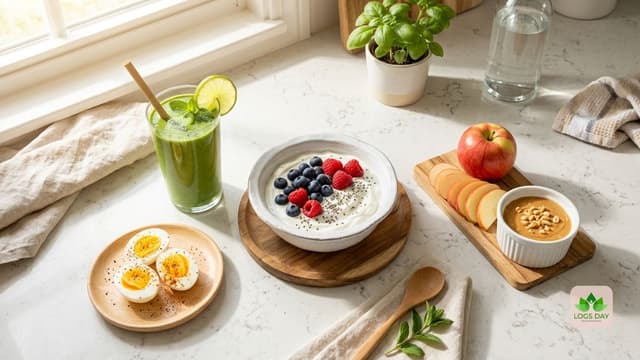
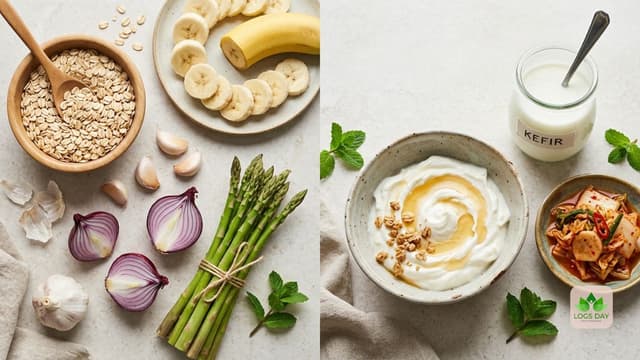
The gut-skin connection is real. Studies indicate that an unbalanced microbiome in the gut has been associated with inflammation of the skin and acne. Probiotic or fermented food in the form of yoghurt, kefir, and kimchi decreases the frequency of breakouts in the long-term.
14. Clean Pillowcase Routine
![[image]](https://admin.logsday.com/storage/media/Clean_Pillowcase_Routine_2026-03-12_15-48-30_4ehcuY2r.jpg)
This is the simplest and most ignored home remedy for acne. Oil, bacteria, and dead skin are all the stuff your pillowcase accumulates each night. Your face has all that reintroduced to it after eight hours of sleeping on a dirty pillow. Washing every two to three days is a literal difference when it comes to chronic breakouts.
Also read: Intermittent Fasting in 2026: Benefits, Risks, Methods & Who Should Avoid It
5 Popular Remedies to Avoid
Toothpaste causes irritation to the skin and dries the skin without treating acne. Lemon juice is excessively acidic, burns, and hyperpigmented. Baking soda neutralizes the skin pH, making it susceptible to bacteria. Pure essential oils such as lavender and peppermint do not have any burning and contact dermatopathology. Squeezing the pimples causes more bacteria to go deeper, scarring, and infecting the surrounding pores. None of the dermatologists prescribes it in any situation.
When Each Remedy Works Best
Tea tree oil for acne and witch hazel work best on active papules and pustules. Sensitive or inflamed skin is fit with honey and aloe vera. Salicylic acid and bentonite clay act on oily and black headed skin. The most suitable one is niacinamide and probiotics to prevent long-term. Spearmint tea is an acne hormonal cure. Ice is preferable in reducing rapid redness prior to an incidence.
Also read: 15 Desk Exercises for Office Workers: Fight Back Pain, Stiffness & Fatigue at Work
DIY Treatment Schedule
A simple routine to get rid of acne naturally looks like this. Every morning, cleanse with a salicylic acid wash, apply niacinamide serum, and moisturize. Every evening, cleanse again, apply diluted tea tree oil for acne spots, and use aloe vera gel. Twice a week, apply a honey face mask acne treatment followed by a bentonite clay mask. Daily, drink spearmint tea, take a probiotic, and change or flip your pillowcase. This covers bacteria, oil, inflammation, and prevention all at once.
Prevention Tips
Wash your face twice daily. Excessively washing skin causes skin to strip and release more oil. Never sleep in makeup. Wipe your phone screen daily because it has a lot of bacteria. Do not touch your face during the day. Apply non-comedogenic moisturiser and sunscreen every day. These practices not only decelerate new acne breakouts, but also increase the efficacy of your own homemade acne cures.
The Diet Connection
The diet directly influences acne. The high glycaemic foods are spike foods which increase the blood sugar and heighten the production of oil. In studies, dairy has always been associated with acne. Salmon, walnuts, and flax leave contribute to reducing the inflammation of the skin with omega-3 fatty acids. Hydration helps in skin cell turnover. The reduction of sugar and dairy and addition of more water and omega-3s have visible outcomes in four to six weeks.
Expert Opinion
Dr. Whitney Bowe, board-certified dermatologist and author of The Beauty of Dirty Skin, endorses probiotics, dietary changes, and niacinamide as strong first-line approaches for mild to moderate acne before moving to prescriptions. She highlights the gut-skin connection as one of the most underappreciated factors in acne care. On the other hand, Dr. Joshua Zeichner, Director of Cosmetic and Clinical Research at Mount Sinai Hospital, has publicly backed tea tree oil for acne and niacinamide as evidence-based DIY acne remedies that work comparably to some prescription ingredients when used consistently. Both agree that lemon juice and baking soda cause far more damage than the acne they are meant to treat.
Also read: Complete Home Workout Plan (No Equipment): 4-Week Program for All Fitness Levels
When to See a Doctor
Home remedies for acne work well for mild to moderate breakouts. Visit a dermatologist in the case of deep, cystic, and painful acne. See one in case of failure of treatment in eight to twelve weeks. See one to see whether acne is causing scars or impacting your mental health. See one when adult acne has come on suddenly, and there are other symptoms - this could be an indication of a hormonal condition which requires diagnosis. Some acne is a medical condition and deserves proper care beyond any natural acne treatment.
To get more insightful details on different topics of wellness, follow Logsday.