

452
You have probably heard the advice a hundred times. Go to bed earlier. Put your phone away. Make your room dark. But when it comes to actually building a consistent routine that improves your sleep, vague tips are not enough.
You need something you can follow, check off and build into your day without overthinking it. That is exactly what a sleep hygiene checklist gives you. It takes the guesswork out of better sleep and turns it into a simple, repeatable system you can start using from tonight.
I used to think my sleep problems were just about not being tired enough. I would lie in bed scrolling, eat late, drink coffee in the afternoon and wonder why I could not fall asleep.
When I finally sat down and built a structured checklist covering my environment, my evening routine, my daytime habits and even what I ate, the improvement was almost immediate. Not because any single change was magical, but because the combination created the right conditions for sleep to happen naturally.
This article gives you 25 evidence based habits organized into clear categories: your sleep environment, your evening routine, your daytime habits, your diet, and your mental wind down. Treat it like a menu. You do not need to do all 25 at once. Pick the ones that fit your life and build from there.
What Is Sleep Hygiene and What Is It Not?
Sleep hygiene is a set of daily habits and environmental conditions that support consistent, high quality sleep. It is not a cure for sleep disorders. It is not about perfection. And it is not about following rigid rules that make you anxious about sleep, which can actually make things worse.
Think of it like dental hygiene. Brushing and flossing do not guarantee you will never have a cavity, but they dramatically reduce your risk. Sleep hygiene works the same way. It creates the conditions under which good sleep is most likely to happen. When practiced consistently, these habits help regulate your circadian rhythm, reduce sleep latency (the time it takes to fall asleep) and improve the depth and continuity of your rest.
If you have been practicing good sleep hygiene for more than four weeks without meaningful improvement, the issue may be clinical insomnia or an underlying sleep disorder like sleep apnea. In that case, it is worth speaking with a sleep specialist. But for most people, the habits below can make a significant difference.
What Should Your Sleep Environment Checklist Include?
Your bedroom should feel like a place designed for rest. These five habits help create that environment.
1. Set your room temperature between 60 and 67°F (15 to 19°C). Your body needs to cool down to initiate and maintain sleep. A warm room is one of the most common and easily fixable causes of poor sleep. Use a fan, adjust your thermostat or switch to lighter bedding during warmer months.
2. Make your room as dark as possible. Even small amounts of light can suppress melatonin production and fragment your sleep. Use blackout curtains or a quality sleep mask. Cover any standby lights on electronics. If you need a night light for safety, choose one with a red or amber tone, which has the least impact on melatonin.
3. Minimize noise disruptions. If you live in a noisy environment, use a white noise machine, a fan, or earplugs designed for sleeping. Consistent ambient sound is better than silence punctuated by random noise. Pink noise, which has a slightly deeper tone, has shown promise in research for supporting deeper sleep stages.
4. Keep the air fresh and clean. Stuffy or dry air can cause nasal congestion and throat irritation, both of which disrupt sleep. Open a window for a few minutes before bed, or use a humidifier during dry months. If allergies are an issue, an air purifier can help reduce dust, pollen and pet dander in your bedroom.
5. Choose comfortable, breathable bedding. Your mattress and pillows should support your body without creating pressure points. Bedding made from cotton, bamboo or linen breathes better than synthetic materials. Replace your pillow every 1 to 2 years and your mattress every 7 to 10 years. Comfort is not a luxury. It directly affects how well you sleep.
Also Read: How to Improve Deep Sleep: 12 Strategies for Better Rest
What Does an Effective Evening Routine Checklist Look Like?
What you do in the 60 to 90 minutes before bed sets the stage for how well you sleep. These five habits help your brain and body transition from the activity of the day into a state ready for rest.
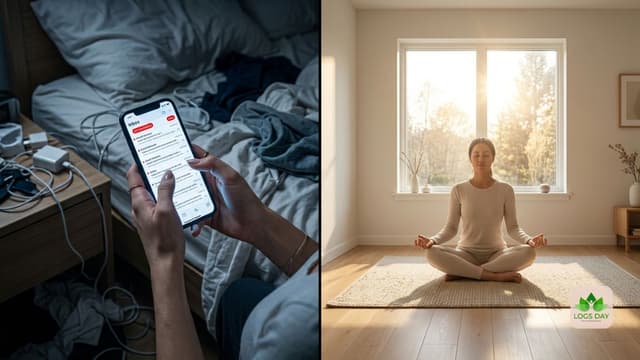
6. Set a screen cutoff time at least 30 to 60 minutes before bed. Screens emit blue light that suppresses melatonin, but the bigger issue is cognitive stimulation. Emails, social media and news keep your brain in an alert, reactive state. Put your phone on charge in another room if possible. If you must use a device, enable the warmest night mode setting available.
7. Dim the lights in your home after sunset. Bright overhead lighting in the evening tells your brain it is still daytime. Switch to lamps, candles or warm toned bulbs in the hours leading up to bed. This gradual dimming mimics the natural transition from day to night and supports melatonin production.
8. Do 5 to 10 minutes of gentle stretching. Stretching releases physical tension accumulated during the day, especially in the neck, shoulders, hips and lower back. It also signals to your nervous system that it is time to wind down. Keep it gentle. This is not a workout. Focus on slow, held stretches with deep breathing.
9. Write in a journal for 3 to 5 minutes. Journaling before bed helps you offload the mental clutter that keeps your mind racing at night. Write down what is on your mind, what went well today, or what you are grateful for. Research shows that writing a to do list for the next day can also reduce sleep onset time because it moves unfinished tasks out of active processing.
10. Create a consistent pre bed ritual. Whether it is making herbal tea, reading a few pages of a book, doing a short meditation or simply washing your face and brushing your teeth in the same order every night, a ritual trains your brain to associate these actions with sleep. Over time, the ritual itself becomes a sleep cue.
Which Daytime Habits Have the Biggest Impact on Sleep Quality?
Sleep does not start when you get into bed. It is shaped by what you do during the entire day. These five daytime habits have the strongest evidence for improving nighttime sleep.
11. Get 20 to 30 minutes of natural sunlight in the morning. Morning light exposure is one of the most powerful ways to regulate your circadian rhythm. It tells your brain to suppress melatonin, boost cortisol and start the internal clock that will trigger melatonin release 14 to 16 hours later. Even on cloudy days, outdoor light is many times brighter than indoor light.
12. Stop all caffeine after 2 PM. Caffeine has a half life of 5 to 6 hours, meaning half of it is still circulating hours after you drink it. Even if you can fall asleep, late caffeine reduces deep sleep and increases nighttime awakenings. This includes coffee, black tea, green tea, energy drinks and chocolate.
13. Exercise regularly but finish at least 3 hours before bed. Regular physical activity improves sleep quality, increases deep sleep and helps regulate your body clock. However, intense exercise too close to bedtime can raise your core temperature and stimulate your nervous system, making it harder to fall asleep. Morning or afternoon exercise is ideal.
Also Read: Simple Anger Management Techniques for Adults: From Reaction to Calm Thinking
14. Open your exercise window to include sunlight when possible. Combining exercise with outdoor light exposure multiplies the benefit. A morning walk, a lunchtime jog or an outdoor stretching session gives your circadian rhythm a double signal that syncs your sleep wake cycle more effectively than either habit alone.
15. Keep naps short and early. If you need to nap, keep it under 20 to 30 minutes and do it before 3 PM. Longer or later naps can reduce your sleep drive, the natural pressure that builds throughout the day and helps you fall asleep at night. A well timed short nap can boost alertness without interfering with nighttime sleep.
How Does What You Eat Affect How Well You Sleep?
Your diet plays a bigger role in sleep than most people realize. These five habits help you avoid the dietary pitfalls that fragment sleep and support the nutrients your body needs for rest.
16. Finish your last large meal 2 to 3 hours before bed. Eating a heavy meal too close to bedtime forces your digestive system to work when your body should be winding down. It can cause acid reflux, bloating and discomfort that disrupt sleep. If you are hungry before bed, keep it light.
17. Avoid spicy, fatty and acidic foods in the evening. These foods are the most common dietary causes of nighttime heartburn and digestive discomfort. Tomato based sauces, fried foods, citrus and heavily spiced dishes are best saved for earlier in the day.
18. Choose sleep promoting snacks if needed. If you need a small snack before bed, reach for foods that contain tryptophan, magnesium or complex carbohydrates. Good options include a banana with almond butter, a small bowl of oatmeal, a handful of walnuts, or warm milk with a pinch of turmeric. These support melatonin and serotonin production.
19. Limit alcohol, especially within 3 hours of bed. Alcohol may help you feel drowsy initially, but it suppresses deep sleep and REM sleep, increases nighttime awakenings and leads to less restorative rest overall. Even one or two drinks in the evening can measurably reduce sleep quality.
20. Stay hydrated during the day but taper in the evening. Dehydration can cause headaches, dry mouth and restless sleep. But drinking too much water close to bedtime means waking up to use the bathroom. Aim to drink most of your water during the first half of the day and taper off after dinner.
Also Read: Hypothyroidism Lifestyle Tips: Simple Changes That Make a Real Difference
What Mental Habits Help Quiet Your Mind Before Sleep?
For many people, the body is tired but the mind will not stop. These five mental habits help break the cycle of nighttime overthinking and create a sense of calm that invites sleep.
21. Do a worry dump. Take a piece of paper and write down everything that is on your mind. Do not organize it. Do not solve anything. Just get it out of your head and onto the page. This simple act of externalizing your thoughts reduces the cognitive arousal that keeps you awake. Research shows this is more effective than trying to suppress or ignore worries.
22. Practice gratitude for 1 to 2 minutes. Think of three things from the day that went well or that you are grateful for. They do not have to be big. A good meal, a kind word, a moment of quiet. This shifts your brain from problem solving mode into a more positive, relaxed state. Studies have linked gratitude practices with improved sleep quality and faster sleep onset.
23. Do a body scan. Lie in bed and slowly bring your attention to each part of your body, starting from your toes and moving up to your head. Notice where you hold tension and consciously relax those areas. This practice activates the parasympathetic nervous system and helps your body release the physical tension that keeps you alert.
24. Avoid clock watching. Checking the time during the night increases anxiety about not sleeping, which makes it even harder to fall back asleep. Turn your clock away from the bed or remove it from the room entirely. If you use your phone as an alarm, place it face down or in a drawer so you are not tempted to check the time.
25. If you cannot sleep after 20 minutes, get up. Lying in bed awake trains your brain to associate the bed with wakefulness rather than sleep. If you are not asleep within 20 minutes, get up and go to another room. Do something quiet and boring in dim light, like reading a dull book or sorting laundry. Return to bed only when you feel sleepy. This technique is a core part of cognitive behavioral therapy for insomnia.
Also Read: Loneliness Epidemic 2026: Trends, Triggers and Hope
What Are the Most Common Sleep Hygiene Myths That Need Busting?
There is a lot of misinformation about sleep floating around, especially on social media. Here are some of the most common myths that can actually make your sleep worse if you follow them.
Myth: You need exactly 8 hours of sleep. The truth is that sleep needs vary by individual. Most adults need 7 to 9 hours, but some function perfectly well on 7 and others genuinely need closer to 9. The quality and consistency of your sleep matter more than hitting a specific number.
Myth: Sleeping in on weekends makes up for lost sleep. While you can partially recover from sleep debt, irregular sleep timing disrupts your circadian rhythm. A consistent wake time, even on weekends, is more beneficial than trying to catch up with long lie ins that shift your internal clock.
Myth: Watching TV in bed helps you relax. TV might feel relaxing, but the light and cognitive stimulation it provides work against sleep. Your bed should be associated with sleep, not entertainment. Reading a physical book or listening to an audiobook is a better alternative.
Myth: Alcohol helps you sleep better. Alcohol helps you fall asleep faster, but it severely disrupts sleep architecture. It reduces deep sleep and REM sleep, increases fragmentation and often leads to waking up in the second half of the night as the sedative effect wears off.
Myth: You can train yourself to need less sleep. This is a dangerous myth. Chronic sleep restriction impairs cognitive function, weakens the immune system and increases the risk of serious health conditions. A small percentage of people have a genetic variation that allows them to function well on less sleep, but this is extremely rare. For most people, cutting sleep short has real consequences.
Also Read: How to Deal With Grief Naturally: Finding Your Way Through Loss
What Is the Best Way to Start Using This Sleep Hygiene Checklist?
Do not try to change everything at once. That is the fastest way to feel overwhelmed and give up. Instead, pick three to five habits from the checklist that feel most relevant to your current situation. Practice them consistently for two to four weeks before adding more.
A good starting point for most people is this: set a fixed wake time (habit 11 and the foundation of your circadian rhythm), make your room cooler and darker (habits 1 and 2), cut caffeine after 2 PM (habit 12), and do a simple wind down routine 30 minutes before bed (habits 6, 7 and 10). These alone can create a noticeable improvement.
Your sleep hygiene checklist is not about perfection. It is about building a system that supports your body’s natural ability to rest. Print it out, put it somewhere visible, and check off the habits you complete each day. Over time, these small actions become automatic, and better sleep becomes your new normal.