

842
There are days when your mind feels like a busy room, filled with constant thoughts and distractions. This is where meditation for focus and concentration can help you improve focus naturally and regain mental clarity. You try to concentrate, but other things get in the way. That's exactly where meditation for focus and concentration can make a big difference. You don't need fancy tools or a lot of time. A few minutes can make a big difference.
I remember sitting at my desk and trying to finish my work, but I kept getting distracted. It was annoying. That's when I began looking into easy ways to reset my mind. At first, I didn't expect much, but things started to change slowly.
If you’ve ever wondered how to improve focus naturally, this guide will help you in the simplest way possible.
A Calm Mind Starts Here
I still remember the first time I tried to meditate. I sat still and closed my eyes, and in a matter of seconds, my mind started to race. I thought I was doing it wrong. But I kept going.
There were days when I could hardly sit still for two minutes. On other days, I felt calm for the first time in a long time. I saw small wins over time. I could pay attention for longer. I was less stressed. My sleep even got better.
I also tried a few mindfulness meditation techniques that helped me stay present. Slowly, I started building a daily meditation routine without pressure. I kept it simple and real.
Now, meditation for focus and concentration is part of my routine. It’s not tough. It’s just consistent.
Also read: Why Big Dreams Trigger Self-Doubt
What Is Meditation and Why It Works
In simple terms, meditation is teaching your mind to stay in the moment. You focus on one thing, like your breathing, a sound, or even nothing at all. You gently bring your mind back when it starts to drift.
This simple act makes your attention stronger over time.
Why it helps:
- It cuts down on mental noise
- It makes things clearer
- It helps your brain stay focused
- It makes you less stressed
The benefits of meditation for the brain are significant, helping you stay calm, improve clarity, and handle challenging situations more effectively.
Meditation for focus and concentration becomes like a mental workout when done every day. I found that even on busy days, taking a short break helped me get back on track. It was like giving my brain a break. Experts say that meditation is a simple but powerful way to boost your focus and concentration. Mindfulness teachers stress the importance of training the mind to stay in the present, as Headspace meditation quotes notes.
Types of Meditation That Improve Focus
Breathing Meditation
![[image]](https://admin.logsday.com/storage/media/Breathing_Meditation_2026-03-25_17-40-36_zGLh6UXP.jpg)
This is the simplest form of meditation. You sit quietly and focus only on your breath. You notice each inhale and exhale. When your mind wanders, you gently bring it back to breathing. This method is very effective for beginners. It trains your mind to stay in one place. Over time, it builds strong attention. It is also one of the easiest ways to practice meditation for focus and concentration without feeling overwhelmed.
Mindfulness Meditation
![[image]](https://admin.logsday.com/storage/media/Mindfulness_Meditation_2026-03-25_17-41-20_tHZRaKWE.jpg)
You stay aware of the present moment in this kind. You look at your thoughts, feelings, and the world around you without judging them. You don't try to control anything. You just notice. This is one of the most popular mindfulness meditation techniques. It helps you become more aware in daily life. You begin to pay attention to little things, like how you breathe or how you walk. Being aware of this naturally helps you focus better and calms your mind.
Guided Meditation
![[image]](https://admin.logsday.com/storage/media/Guided_Meditation_2026-03-25_17-42-48_042zr6Pv.jpg)
If you're new to meditation, guided meditation is a great way to start. You hear a voice that tells you what to do one step at a time. Following instructions helps you stay focused. A lot of people think this is easier than meditating in silence. A good guided meditation for beginners can help you relax and stick to your plan. It also makes it less stressful to have to do everything by yourself. This makes it easier to form a strong habit.
Body Scan Meditation
![[image]](https://admin.logsday.com/storage/media/Body_Scan_Meditation_2026-03-25_17-44-08_g2eb3sSH.jpg)
In this method, you focus on different parts of your body one by one. You slowly shift your focus from your head to your toes. You don't react when you feel any tension or sensation. This kind of meditation really helps you relax. It also makes you more aware. Over time, it supports meditation for focus and concentration by helping you stay present and connected to your body.
Jon Kabat-Zinn says, "The best way to capture moments is to pay attention." This shows that paying attention is a skill that can be learned through practice. Even modern meditation guides note that taking a break and being present can help you "recharge and gain perspective."
Benefits You Can Feel in Everyday Life
Meditation is not just about sitting quietly. It shows up in your daily life in simple ways.
You will notice:
- Better attention during work
- Fewer distractions while reading
- Improved memory
- More patience in conversations
One small change I saw was during meetings. I could actually listen without thinking about ten other things. That felt powerful. I also realized that using simple mindfulness meditation techniques during the day made a big difference.
When you practice meditation for focus and concentration, these benefits grow slowly but steadily.
Simple Steps to Start Meditation Today
It doesn't have to be hard to start meditating. Make it simple.
Do these things:
- Make yourself comfortable in a quiet place
- Close your eyes or look away
- Pay attention to your breath
- Take a deep breath and then let it out.
- Bring your mind back when it starts to wander
Five minutes is a good place to start. That's all.
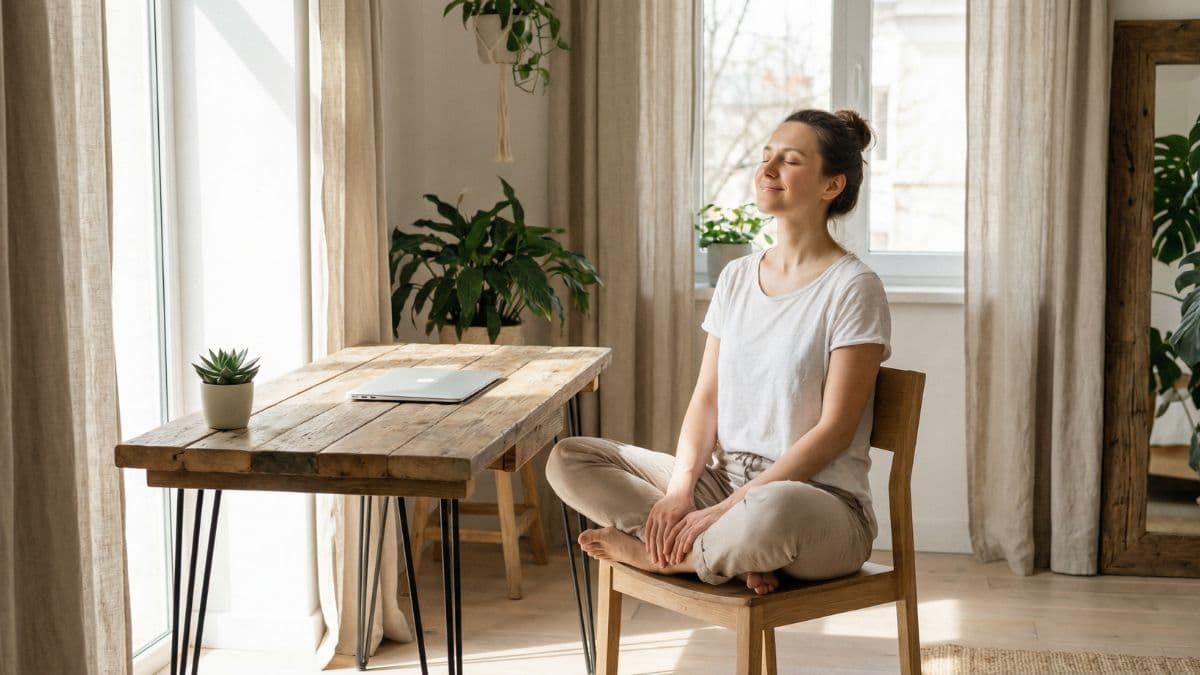
I used to think I needed everything to be perfect. But really, I started on a chair in my room. No candles. No sound. It's just me and my breath. It was easier to stay consistent when I followed a simple daily meditation routine.
Being consistent is more important than being perfect.
Also read: Balancing the Silent Battle Between Logic and Emotion When Making a Decision
Best Time to Practice Meditation
There is no “perfect” time. But some moments work better than others.
Try these:
- Morning: Helps you start fresh
- Midday: Resets your energy
- Evening: Calms your mind before sleep
I personally enjoy morning sessions. It sets the tone for my day. But on busy days, even a quick afternoon break works.
The key is to make meditation for focus and concentration a part of your routine. Even a short session can support your goal of how to improve focus naturally.
Common Mistakes to Avoid
Many people quit meditation because they think they are doing it wrong.
Avoid these mistakes:
- Expecting instant results
- Trying too hard to stop thoughts
- Sitting for too long in the beginning
- Skipping practice on busy days
Your mind will wander. That’s normal. The goal is not to stop thoughts but to notice them.
I used to get frustrated when I couldn’t stay focused. But once I accepted that it’s part of the process, meditation became easier. Trying a guided meditation for beginners helped me stay on track in the early days.
How Long Should You Meditate?
You don't need a lot of time.
Start small:
- Five minutes every day
- Go up to 10 to 15 minutes
- Slowly work your way up to 20 minutes
It's better to do short sessions every day than long sessions once in a while.
I used to think that more time meant better results. But even 10 minutes a day made a big difference. A simple daily meditation routine helped me stay on track without feeling rushed.
Creating a Meditation-Friendly Space
Your surroundings can help you stay on track.
Make it easy:
- Pick a quiet spot
- Sit in a chair or on a cushion that feels good
- Stay away from things that will distract you
- Keep the area clean
You don't need a special space. A small, quiet place is all you need.
I made a small space in my room. Not much. But it became my favorite place to unwind and think. This small change helped me stay committed to meditation for focus and concentration.
How Meditation Changes Your Brain
Meditation actually changes how your brain works.
It strengthens areas related to attention. It also reduces activity in the part of the brain that causes stress and distraction. The benefits of meditation for brain include better memory and improved emotional control.
Over time, meditation for focus and concentration improves your ability to stay present.
I didn’t notice this change immediately. But after a few weeks, I felt more in control of my thoughts. It became easier to focus on one task at a time.
Using Meditation in Daily Life
Meditation is not just something you do while sitting.
You can practice it anytime:
- While walking
- While eating
- While listening to someone
- Even while working
Just bring your attention back to the present moment.
I often take a few deep breaths before starting a task. It helps me focus better. These small actions are part of how to improve focus naturally without extra effort.
Staying Consistent Without Feeling Overwhelmed
Consistency is the real secret.
Keep it easy:
- Set a fixed time
- Use reminders
- Start small
- Track your progress
I missed days in the beginning. But instead of quitting, I simply started again. Listening to a short guided meditation for beginners helped me get back on track.
That mindset helped me stick with meditation for focus and concentration.
Signs That Meditation Is Working
Sometimes, progress is not obvious.
Look for these signs:
- You feel calmer
- You react less quickly
- You can focus longer
- You feel more aware
These small changes add up over time.
I noticed I was less distracted while reading. That was a clear sign for me. It showed me the real benefits of meditation for brain in everyday life.
A Simple Habit That Changes Everything
Life is busy. Distractions are everywhere. But you don’t need to control everything. You just need a small pause each day. That pause is where clarity begins.
Meditation for focus and concentration is not about being perfect. It’s about showing up.
I still have days when my mind feels messy. But now, I know how to come back to calm. That’s the real power of building a simple daily meditation routine.
And that makes all the difference.
Explore more simple lifestyle guides on Logsday to improve focus naturally and build better daily habits for a calmer, more productive life.
Also read: Growth Mindset for Adults: How to Rewire Your Brain for Success at Any Age
Sources
- https://www.calm.com/blog/focused-meditation
- https://my.clevelandclinic.org/health/articles/17906-meditation
- https://mindworks.org/blog/how-meditate-better-concentration/
- https://greatergood.berkeley.edu/article/item/five_ways_mindfulness_meditation_is_good_for_your_health
- https://health.ucdavis.edu/blog/cultivating-health/10-health-benefits-of-meditation-and-how-to-focus-on-mindfulness-and-compassion/2022/12