
1782
Is cream cheese bad for you? Discover hidden cream cheese health risks, nutrition facts, and smart swaps for healthier choices.
September 6, 2025— Cream cheese has become a popular spread on bagels, toast, and crackers around the world. Many people also use it in cheesecakes, dips, and frostings. Its smooth texture and mild flavor make it an easy choice in both sweet and savory dishes. But while cream cheese may feel like a harmless treat, experts now warn that eating too much can carry health risks.
The question many people ask is: is cream cheese bad for you? The answer depends on how much you eat, how often, and what type you choose. Nutritionists say cream cheese is fine in moderation, but too much can raise risks related to fat, sodium, and additives. For health-conscious food lovers, understanding these concerns is important before spreading the next layer on your morning bagel.
A Quick Look at Cream Cheese Nutrition
To understand cream cheese health risks, it helps to look at its nutrition profile. A two-tablespoon serving contains about 100 calories. Most of these calories come from fat. Roughly 9 grams of fat are present, and about 5 grams are saturated fat. It also has around 90 milligrams of sodium. Protein is low, usually just 2 grams.
Compared with butter, cream cheese has less fat and fewer calories. But unlike butter, it often contains stabilizers and preservatives that help keep it smooth and extend its shelf life. While that makes it easy to spread, these additives may raise questions for people trying to eat clean.
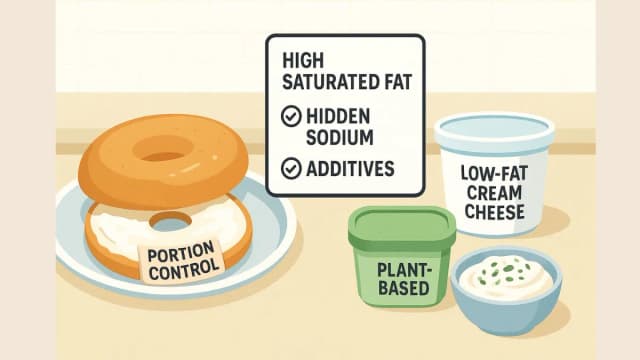
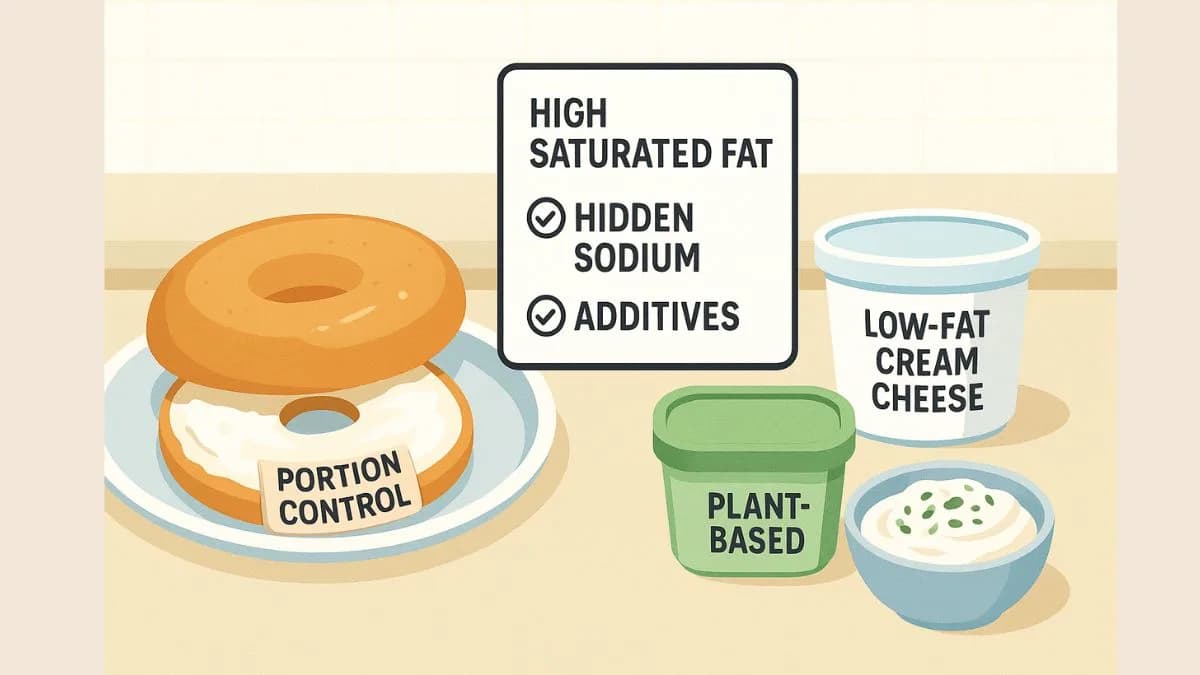
So, while cream cheese is lighter than butter in some ways, it still carries health concerns. Let’s look at the three biggest ones: saturated fat, sodium, and additives.
Why Cream Cheese Can Be a Health Concern
High Saturated Fat
Saturated fat is the type of fat most associated with higher cholesterol and heart problems. Cream cheese gets much of its creamy texture from saturated fat. Eating it once in a while may not harm you, but frequent use can add up. Experts suggest keeping saturated fat under 10% of daily calories. If cream cheese is a daily habit, that number can be reached quickly.
Hidden Sodium
Cream cheese does not taste salty, but it contains sodium that supports flavor and preservation. Eating foods with hidden sodium can increase blood pressure over time. If you are already eating salty foods like bread, chips, or processed meat, cream cheese may quietly raise your total sodium intake beyond safe levels.
Additives and Preservatives
To keep cream cheese stable and smooth, many brands use additives like guar gum or carrageenan. While these are generally safe, some people report stomach discomfort after eating foods with them. For those who prefer clean labels, additives may be a reason to reduce cream cheese intake.
These three factors—fat, sodium, and additives—make up the main cream cheese health risks. The good news is that moderation and smart swaps can help you enjoy the taste
Smarter Choices and Healthy Swaps
If you love cream cheese, you do not need to give it up completely. Nutritionists often suggest these ways to keep it on the menu without harming your health:
Try Low-Fat Cream Cheese Alternatives
Many brands now sell low-fat or reduced-fat cream cheese. These products contain less saturated fat and fewer calories. While the texture may feel slightly different, they still work well as spreads and in recipes.
Explore Plant-Based Cream Cheese Benefits
Plant-based versions are growing in popularity worldwide. They are made from nuts, soy, or oats. These options usually contain less saturated fat and no dairy additives. Many also offer fiber, which traditional cream cheese lacks. Choosing plant-based spreads can help cut cholesterol risks while keeping flavor.
Mix with Healthier Foods
Another trick is blending cream cheese with Greek yogurt or cottage cheese. This reduces fat and adds protein. Some people also mix it with herbs or vegetables to increase nutrition while reducing the amount used.
Portion Control
The simplest step is to eat cream cheese in smaller amounts. Use it as a thin spread instead of a thick layer. Save rich cream cheese desserts for special occasions, not daily snacks.
Storage and Safety Tips
Cream cheese should always be stored in the refrigerator. Once opened, it usually lasts for about two weeks. Freezing is not recommended because it changes the texture. If you see mold or smell sour odors, it is best to throw it away.
Storing cream cheese correctly also helps reduce health risks. Spoiled cream cheese can cause foodborne illness, especially in children, pregnant women, and older adults. Always check the label for the “best by” date and handle it with clean utensils.
Final Thoughts
Cream cheese is loved for its creamy taste and smooth texture. Inside, however, are hidden risks from saturated fat, sodium, and additives. For people who care about long-term health, these concerns cannot be ignored.
The good news is that with moderation, storage care, and smart swaps like low-fat or plant-based versions, cream cheese can still be enjoyed. Knowing the nutrition facts helps you make better choices. And comparing cream cheese vs butter health values can guide you toward lighter options when needed.
So, the next time you reach for that tub, remember: cream cheese is best as an occasional treat, not a daily habit.
For more health and lifestyle tips, visit Logsday. Stay informed, make smarter food choices, and keep building a balanced lifestyle.
Looking for deeper wellness stories, food guides, and nutrition updates? Explore the Logsday Lifestyle section today.
Sources
https://www.usatoday.com/story/life/health-wellness/2025/09/05/can-you-freeze-cream-cheese/85881989007
https://www.health.harvard.edu/heart-health/eat-cheese-if-you-please
https://www.ewg.org/foodscores/products/021000619870-PhiladelphiaWhippedCreamCheeseSpread
https://www.bmj.com/content/382/bmj-2023-076058