
458
Can drone-delivered naloxone fight the opioid epidemic? Discover how emergency medical drones can reduce overdose response times and save lives.
September 7, 2025 — The opioid epidemic is now a global health crisis. Overdose deaths are rising across countries, and families are losing loved ones every day. Governments, health systems, and communities are searching for faster and more effective solutions.
A new idea is gaining attention: drone-delivered naloxone. This innovation uses emergency medical drones to deliver naloxone, a life-saving medicine that can reverse an opioid overdose. The technology is designed to help reduce overdose response times, give people a second chance at life, and support overwhelmed emergency medical teams.
Across Virginia Beach, a model drone delivery program has shown that technology can reach victims faster than ambulances. This approach holds promise not only for American cities but also for communities worldwide facing the opioid crisis.
How Drone-Delivered Naloxone Works
Naloxone is a simple but powerful medicine. When sprayed into the nose or injected, it can quickly reverse the deadly effects of opioids. However, timing is critical. Every minute of delay can lower survival chances.
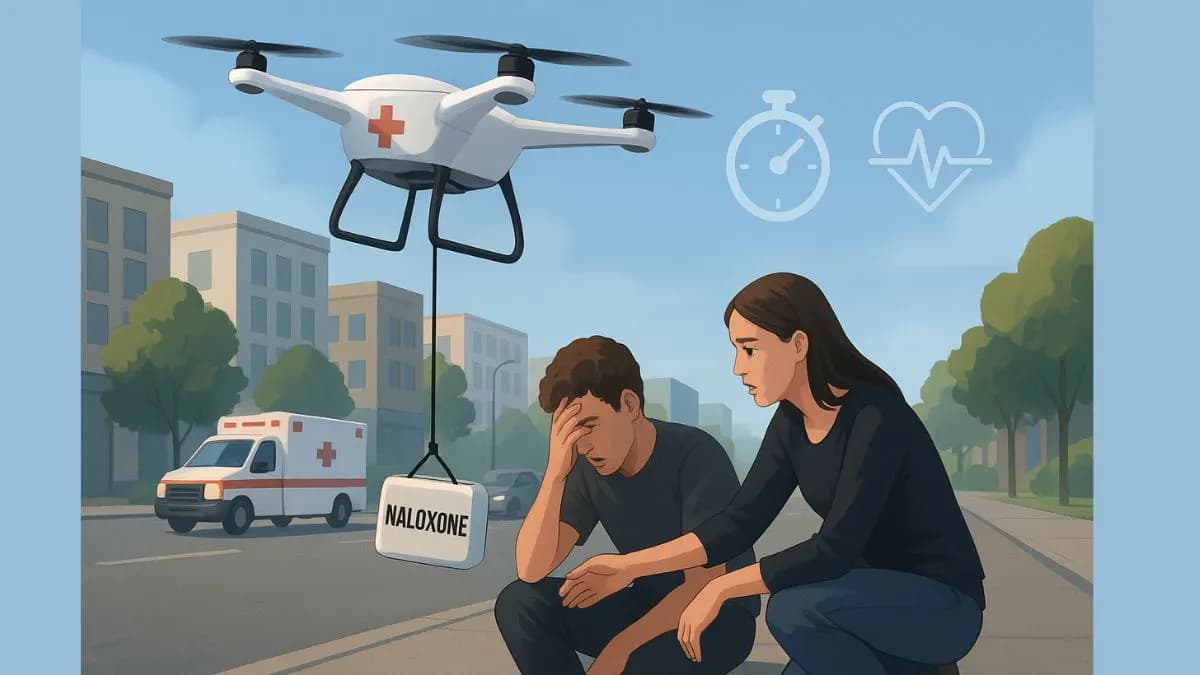
Emergency responders often face traffic, distance, or delays when rushing to an overdose scene. This is where naloxone drone delivery offers hope. Once a 911 call comes in, drones can be dispatched to the exact GPS location. Flying over traffic and barriers, they can carry naloxone kits and arrive much faster than ground vehicles.
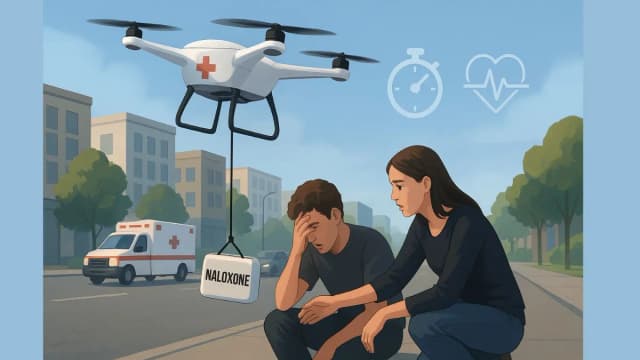
On arrival, the drone lowers the kit to the ground. A bystander or family member can use it before paramedics reach the site. This bridge of care could save lives, especially in areas where ambulance response takes more than 10 minutes.
Virginia Beach has tested this system with encouraging results. Drones can often arrive within three to five minutes, compared to the average ambulance arrival time of 10 minutes or more. Those saved minutes matter in emergencies.
The Global Potential of Emergency Medical Drones
The opioid crisis is not only an American problem. Countries in Europe, Asia, and even Africa are reporting rising cases of misuse, addiction, and overdose. The search for opioid epidemic solutions is urgent and global.
Emergency medical drones can work in many environments—urban, rural, or coastal. Cities with heavy traffic can benefit from faster air routes. Villages far from hospitals can receive naloxone kits in record time. Even countries with limited emergency medical staff may find this technology useful.
Beyond naloxone, these drones can also carry other emergency supplies. But for now, their focus on opioid overdose response highlights how technology can fight a modern health challenge.
Policymakers are watching closely. Many communities ask: how do we regulate drone flights, ensure privacy, and train people to use naloxone? These are valid concerns. Yet, the urgency of saving lives is pushing leaders to test new methods.
If scaled properly, EMS opioid response technology could give governments a new weapon in the fight against overdose deaths. Partnerships between drone companies, municipalities, and health agencies are also expected to play a significant role.
Policy, Training, and Implementation Challenges
Drone networks sound simple, but running them is difficult. Regulations for drone flights differ across countries. Some places restrict how high or far drones can fly. Others require trained pilots to monitor every mission.
Funding is another issue. Setting up a drone delivery system needs investment in technology, staff training, and maintenance. Many local governments face budget constraints and often weigh costs against benefits.
Training is also essential. Bystanders who receive a naloxone kit must know how to use it correctly. Public awareness campaigns, community workshops, and simple instruction videos can make a big difference.
Still, experts argue that waiting is more costly. Every year, the opioid epidemic takes hundreds of thousands of lives worldwide. Faster solutions are not just an option—they are a necessity.
The Human Side of Technology
Behind every statistic is a person: a brother, sister, parent, or friend. Families often say they never expected addiction to strike their loved ones. Many recall the panic of waiting for an ambulance while watching someone struggle to breathe.
Drone-delivered naloxone cannot solve the epidemic alone. But it can give families precious minutes and save lives that would otherwise be lost. For parents who get a second chance to hug their child, technology becomes more than a machine—it becomes hope.
In Virginia Beach, residents have welcomed the program with cautious optimism. Some say it feels strange to look up and see a drone carrying medicine. Others believe it is the kind of bold step communities need in desperate times.
Globally, people are watching to see if these pilot projects can scale. If proven successful, drones could become as common in emergency response as ambulances and fire trucks.
From Pilot Projects to Global Solutions
The opioid epidemic continues to evolve, and so must our response. Drone-delivered naloxone represents a creative mix of technology and public health. It is not a silver bullet, but it can be a strong tool in a broader strategy.
Communities will need more education, stronger healthcare systems, and policies that reduce misuse in the first place. Yet, saving lives in the moment remains the top priority. With drones reducing overdose response times, survival rates could rise, giving people a chance at recovery and hope for the future.
As nations debate policies and investments, one question remains: how many more lives could we save if naloxone arrived faster?
At Logsday, we bring you stories that connect technology, health, and society. Stay tuned for more updates on global solutions that matter.
For more stories on how innovations shape everyday living, explore Logsday Lifestyle and discover how change starts in simple ways.
Sources
https://gwtoday.gwu.edu/drones-could-transform-emergency-response-opioid-overdoses
https://pmc.ncbi.nlm.nih.gov/articles/PMC10687938