
687
Get right answers of does a bedroom need a closet, with ideas of its modern alternatives, and role in enhancing look and value of a house.
Key Takeaways:
- Diverse closet alternatives
- Stylish storage options
- Design with purpose
For a privacy loving person, like me, bedrooms are the most favorite place in a house, where one can be oneself. I have a bedroom which includes all shades of a house. It has an office desk, a queen size bed, a recliner and my most favorite, the closet. Do you know why? I love to trial all my outfits in front of the mirror and access all my accessories in my comfort zone, without worrying to walk outside of the room.
Often, I and my partner argue about choosing the sides of closets. I always opt for the side having maximum drawers and he always choses the sides having huge racks for hanging his suits, pants, and shirts. Having a closet in bedroom saves your time to run to other rooms to get your valuables.
In this blog, we will talk about the types of closets a bedroom require, their aesthetic appeal, and the role of closets in booming your property value. So, shall we start?
What Constitutes a Closet
While discussing bedroom closets, it’s essential to understand what qualifies as a closet compared to other types of storage solutions. A closet is a small, enclosed space inside a home, usually with a door, used to store clothes, sheets, or other items. To make the most of this space, using smart closet organizing tips, like adding shelves, bins, or hanging organizers, can help keep everything neat and accessible.
However, there are different types of closets which include:
Traditional closets
A traditional closet is a fixed, built-in storage area that forms part of a home’s architectural design. It usually includes walls, a door, and a rod for hanging clothes. These closets are either incorporated during the original construction or added later through permitted renovations to provide a dedicated, enclosed space for storing clothing and personal items.
Walk-in closets
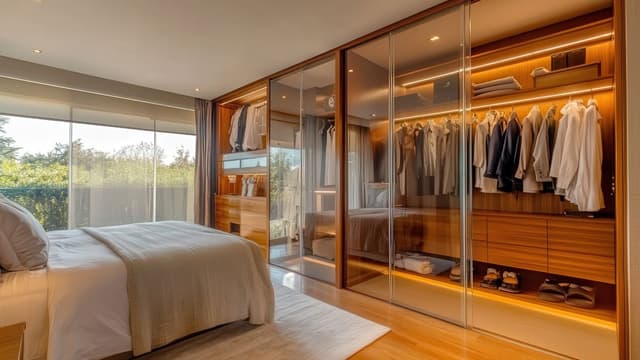
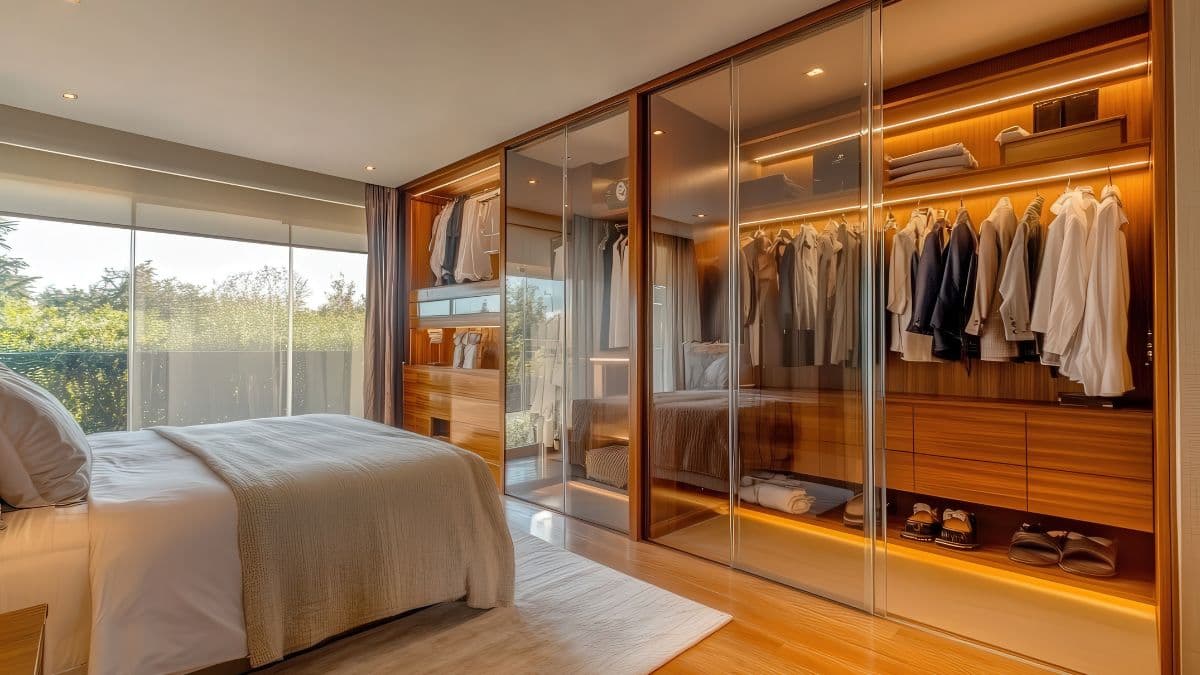
Walk-in closets are spacious enough for you to enter and move around inside, offering enhanced accessibility and ample storage.
Reach-in closets
Reach-in closets are shallower and accessed from outside, typically through sliding or hinged doors. While both types serve the same purpose of organizing clothes and belongings, walk-ins are often favored for their convenience and larger capacity.
Apart from the above types, there are alternative storage solutions such as armories, wardrobes, and built-in cabinetry that provide similar functionality to traditional closets. Though these might not satisfy a buyer’s expectation of a closet, but they serve the same practical purpose.
So, while choosing the type of closet for your bedrooms depends on two most significant factors. They are space and cost. A built-in closet might give you more space while a wardrobe will leave you with less square footage for other things.
Is a Closet Enhance the Appeal of Your Rest Room?
Nowadays, the modern perspective on storage and interior design has evolved. Today, the need for a closet depends heavily on how the space is used and the lifestyle of the occupant.
If you have a minimalist living, then you should prefer pen clothing racks, small armoires, or under-bed storage rather than dedicating an entire section of the room to a traditional wardrobe. These options help you save space and naturally encourage you to declutter your closet.
However, we you live in studio apartments or small spaces, where space has premium value, there you should forgo closets to maximizeversatility. In these cases, multifunctional furniture such as beds with built-in drawers, wall-mounted shelves, or freestanding wardrobes effectively replace built-in closets.
If you are more like me, who love to give modern aesthetic appeal to bedrooms, then you should opt for decorative garment racks, armoires, or bespoke cabinetry that offer both style and function.
Does a Closet Boost the Value of Your Home?
For modern homebuyers and renters, a closet is often considered a minimum requirement, especially in today’s homes where wardrobes and cabinetry are not always built-in. Thus, for resale value or rental appeal, including a closet in the bedroom design can be a profitable decision. Look around your bedroom; is it calm or cluttered? Smart storage can change everything. Here’s why it matters!
- A bedroom with a closet is often seen as more functional and convenient, making the property more attractive to prospective renters.
- Closets contribute to the overall impression of a well-designed, complete living space, which can justify higher rent.
- Built-in storage helps tenants keep their space tidy, which enhances satisfaction and reduces wear and tear on the property.
- In some areas, a room without a closet isn’t legally considered a bedroom, which can limit how you market your property.
- Having closets in every bedroom makes your rental more attractive.
- Moreover, closets eliminate the need for renters to purchase wardrobes or dressers, appealing especially to tenants looking for move-in-ready homes.
- Closets add functional space not just for clothing but also for storing linens, luggage, or seasonal items, broadening the appeal to various tenant types.
- Properties with adequate storage often get higher rents compared to similar-sized units lacking built-in closets.
- Tenants in homes with smart storage solutions are more likely to stay longer, reducing vacancy and turnover costs.
Final Thoughts
So, does a bedroom need a closet? The answer depends on your priorities. If you’re concerned with home resale value, or traditional expectations, then including a closet is a smart move. However, if your focus is on maximizing space, supporting a minimalist lifestyle, or enhancing the room’s aesthetics, then creative storage alternatives could be a great choice.
What matters most is how the space supports your daily life. Whether through a built-in closet or a combination of flexible storage solutions, your bedroom should reflect your needs, habits, and personal style. The concept of a “closet” evolves with how we live. So are you ready to redesign your bedroom?